

Article
What Network and Hardware Checks Should Be Included in a Free-Roam VR Site Assessment?
A comprehensive free-roam VR site assessment requires rigorous network auditing, RF spectrum analysis, and computing hardware evaluation. Learn the essential Wi-Fi 6E/7 metrics, server-client sync parameters, and spatial tracking safety thresholds needed to ensure zero-latency, high-ROI commercial VR operations.
2026-11-06
What Headset Management and Charging Systems Does a Commercial VR Arena Need?
Discover essential headset management and intelligent charging infrastructure required to scale commercial VR arenas, maintain high throughput, and maximize hardware lifecycle.
2026-11-05
How Many Players Can a Free-Roam VR Arena Support in a Given Space?
Discover precise spatial formulas, player density metrics, and layout optimization techniques for free-roam VR arenas. Learn how modern AI tracking enhances throughput and safety.
2026-11-04
How Should Buyers Evaluate Tracking Accuracy in a Free-Roam VR System?
Evaluating tracking accuracy in a free-roam VR system requires analyzing millimeter-level spatial fidelity, latency metrics below 20ms, and occlusion recovery. This expert guide details real-world testing protocols, sensor fusion architectures, and commercial deployment benchmarks to protect venue ROI.
2026-11-03
Free-Roam VR vs. Stationary VR: What Should Commercial Venue Buyers Compare?
Explore an expert comparison of free-roam VR equipment and stationary VR installations for commercial venues. Discover critical technical metrics, space economics, AI integration, and ROI calculations to determine the most profitable virtual reality setup for your location-based entertainment business.
2026-11-02
What Acceptance Tests Should Be Completed Before a VR Shooting Simulator Opens to Customers?
Deploying a commercial VR shooting simulator demands rigorous pre-launch acceptance testing. Discover the essential commissioning checklist, including low-latency tracking, recoil calibration, safety compliance, and AI-driven stress testing, to protect ROI and deliver flawless player immersion.
2026-11-01
What Should Operators Check When Evaluating VR Shooting Simulator Game Libraries?
Discover essential evaluation criteria for commercial VR shooting simulator game libraries. Expert analysis covers AI-driven adaptive difficulty, frame rate stability, commercial licensing, replay mechanics, and hardware-software synergy to maximize arcade ROI.
2026-10-31
What Room Layout and Queue Space Does a Commercial VR Shooting Simulator Need?
Optimizing room layout and queue space for a commercial VR shooting simulator requires balancing physical footprint, dynamic safety buffers, and spectator flow. Drawing on 15 years of location-based entertainment engineering, this guide outlines exact square footage calculations, acoustic dampening, throughput optimization, and AI-driven queuing strategies.
2026-10-30
How Should Buyers Compare Single-Player and Multiplayer VR Shooting Simulator Systems?
A comprehensive technical and financial evaluation framework for family entertainment centers comparing single-player vs. multiplayer commercial VR shooting simulators, covering ROI, spatial yield, AI telemetry, and operational efficiency.
2026-10-29
What Display and Tracking Specifications Matter in a Commercial VR Shooting Simulator?
Explore the critical display and tracking specifications for a commercial VR shooting simulator. Learn how sub-20ms latency, high refresh rates, and AI-driven 6DoF tracking maximize arcade ROI and prevent motion sickness.
2026-10-28
What Should a Commercial VR Racing Simulator Installation and Handover Checklist Include?
A comprehensive commercial VR racing simulator installation and handover checklist must encompass pre-delivery site readiness, 3-phase power distribution, structural anchoring, multi-axis motion platform calibration, VR headset tracking zero-point alignment, software telemetry validation, and staff training protocols. Incorporating automated AI telemetry diagnostics minimizes commissioning drift and maximizes arcade uptime.
2026-10-27
What Software and Hardware Compatibility Questions Should Buyers Ask VR Racing Simulator Suppliers?
Discover the essential software and hardware compatibility questions to ask commercial VR racing simulator suppliers, covering OpenXR standards, direct-drive telemetry, motion cueing latency, and commercial fleet management.
2026-10-26
Single-Player vs. Multiplayer VR Racing Simulators: Which Setup Fits a Commercial Venue?
Discover whether single-player or multiplayer commercial VR racing simulators offer better ROI, throughput, and engagement for your location-based entertainment venue.
2026-10-25
What Space and Power Requirements Should Buyers Check Before Installing a VR Racing Simulator?
Installing a commercial VR racing simulator requires rigorous evaluation of dynamic motion envelopes, dedicated three-phase or single-phase power lines, and thermal dissipation metrics. Discover the exact physical clearance, electrical infrastructure, and facility parameters needed to maximize uptime.
2026-10-24
How to Compare Motion Systems in Commercial VR Racing Simulators
Selecting a commercial VR racing simulator requires comparing actuator mechanics, degrees of freedom (DOF), and AI motion cueing algorithms. Learn how to evaluate latency, vestibular sync, payload durability, and total lifecycle costs to maximize return on investment for location-based entertainment venues.
2026-10-23
Common Health, Safety and Hygiene Concerns With Commercial VR Equipment (and How Operators Solve Them)
Commercial immersive entertainment equipment can create hygiene, motion-sickness, collision, electrical, ergonomic, accessibility, and emergency-response risks if venue procedures are not designed alongside the hardware. Operators reduce these risks through documented cleaning schedules, manufacturer-approved disinfectants, headset and controller inspection, clear play-area zoning, supervised sessions, user screening, ventilation, staff training, preventive maintenance, and incident reporting. Buyers should evaluate wipeable materials, replaceable face interfaces, cable management, emergency stops, adjustable settings, warranty support, and operator documentation before purchasing a VR simulator or arcade attraction. Skyfun supports this operational approach with more than 14 years of international manufacturing experience, OEM and ODM services, venue planning, training, quality control, and a broad portfolio of immersive products.
2026-09-11
Motion Simulators, 9D Egg Chairs and Free-Roam VR: Understanding the Terminology
Motion simulators, 9D egg chairs and free-roam VR are different commercial entertainment formats with distinct hardware, space, staffing and revenue requirements. Motion simulators synchronize a moving seat or platform with digital content; 9D egg chairs combine a compact enclosed seat with motion, audiovisual effects and sometimes environmental effects; free-roam VR gives several users tracked movement inside a defined physical play area. Understanding these categories helps investors, distributors and venue operators select the right immersive attraction, compare supplier specifications and build a commercially viable VR entertainment project.
2026-09-10
Do You Need a License to Run VR Arcade Machines? Regulations by Region
A practical guide for investors, venue operators, and distributors explaining when a VR arcade machine business may require amusement permits, commercial registration, electrical approvals, fire inspections, accessibility compliance, insurance, age-rating controls, and local operating licenses across the United States, European Union, United Kingdom, Australia, Canada, and selected Asian markets.
2026-09-09
The Rise of Location-Based VR Entertainment: Market Trends Every Operator Should Know
Location-based virtual reality is becoming a strategic growth category for family entertainment centers, shopping malls, amusement parks, cinemas, arcades, and mixed-use leisure venues. Operators are moving beyond novelty attractions toward modular VR simulators, multiplayer experiences, racing systems, shooting games, roaming platforms, and repeat-visit entertainment supported by measurable throughput, content rotation, safety controls, and serviceable hardware. This guide explains the market forces shaping venue-based immersive entertainment, the procurement criteria that influence return on investment, and how Skyfun helps global operators plan, source, install, and manage a complete VR and arcade entertainment offering.
2026-09-08
VR Arcade vs Traditional Arcade: How Player Behaviour and Revenue Models Differ
VR arcades and traditional arcades attract players through different engagement mechanics, spending patterns, and operating models. Conventional cabinets encourage repeat play, competition, and longer venue circulation, while immersive virtual reality attractions create higher-impact experiences that often support premium per-play pricing, timed sessions, and group bookings. For investors, the best choice depends on venue size, customer demographics, equipment utilization, maintenance capability, content rotation, and return-on-investment targets. This guide compares player behavior, revenue structures, procurement considerations, and how Skyfun supports scalable VR and arcade venue development.
2026-09-07
How Much Space Do You Need to Install a VR Arcade Machine? Floor Plan Requirements Explained
A commercial VR attraction generally requires more space than the equipment footprint alone. Buyers should plan for the cabinet or motion platform, player movement, safety clearance, queueing, operator access, emergency routes, power, ventilation, and maintenance. Compact seated units may work within approximately 6–10 square meters per station, while motion simulators and immersive roaming attractions commonly require 12–25 square meters or more depending on the manufacturer’s specifications. This guide explains how to calculate the usable floor area, compare equipment categories, create a safe venue layout, and select a supplier capable of delivering equipment planning and operational support.
2026-09-06
Are VR Arcades Still Profitable in 2026? What the Industry Data Says
VR arcades can remain profitable in 2026 when operators treat them as experience-led entertainment businesses rather than simple equipment rentals. Demand is supported by broader growth in immersive technology, location-based entertainment, repeatable group activities, and mixed-reality attractions. However, profitability depends on site selection, hourly utilization, ticket pricing, content rotation, maintenance, staffing, and disciplined capital planning. The strongest projects combine several attractions, use timed sessions, target families and corporate groups, and measure revenue per square meter instead of relying on equipment sales alone.
2026-09-05
7 Types of VR Arcade Machines and Which Venues Each One Suits Best
Choosing the right immersive entertainment equipment depends on venue size, audience profile, available floor space, throughput targets, content format, maintenance capability, and return-on-investment expectations. The seven major categories include 9D cinema systems, 360-degree motion simulators, VR racing platforms, VR shooting attractions, free-roaming or interactive platform systems, AR sniper games, and family-oriented simulator or kiddie ride products. Shopping malls typically benefit from compact, high-throughput attractions, while dedicated entertainment centers can support multiplayer arenas and premium motion platforms. Buyers should evaluate safety, content licensing, warranty support, operator training, spare parts, electrical requirements, and measurable revenue per square meter before selecting a supplier. Skyfun provides OEM and ODM manufacturing, venue planning, training, and global after-sales support across mainstream VR and arcade categories.
2026-09-04
How VR Arcade Machines Actually Work: Hardware, Software and Motion Systems Explained
A commercial VR attraction combines a head-mounted display, tracking sensors, computing hardware, interactive software, audio, safety controls, and—when required—a synchronized motion platform. The right configuration depends on guest throughput, content licensing, floor space, maintenance access, operator skill, and return on investment. This guide explains how immersive arcade systems generate a responsive experience, compares fixed and motion-enabled formats, identifies procurement risks, and shows how Skyfun supports international operators with VR simulators, racing systems, AR shooting attractions, 7D cinema, and complete venue solutions.
2026-09-03
Recommended for you
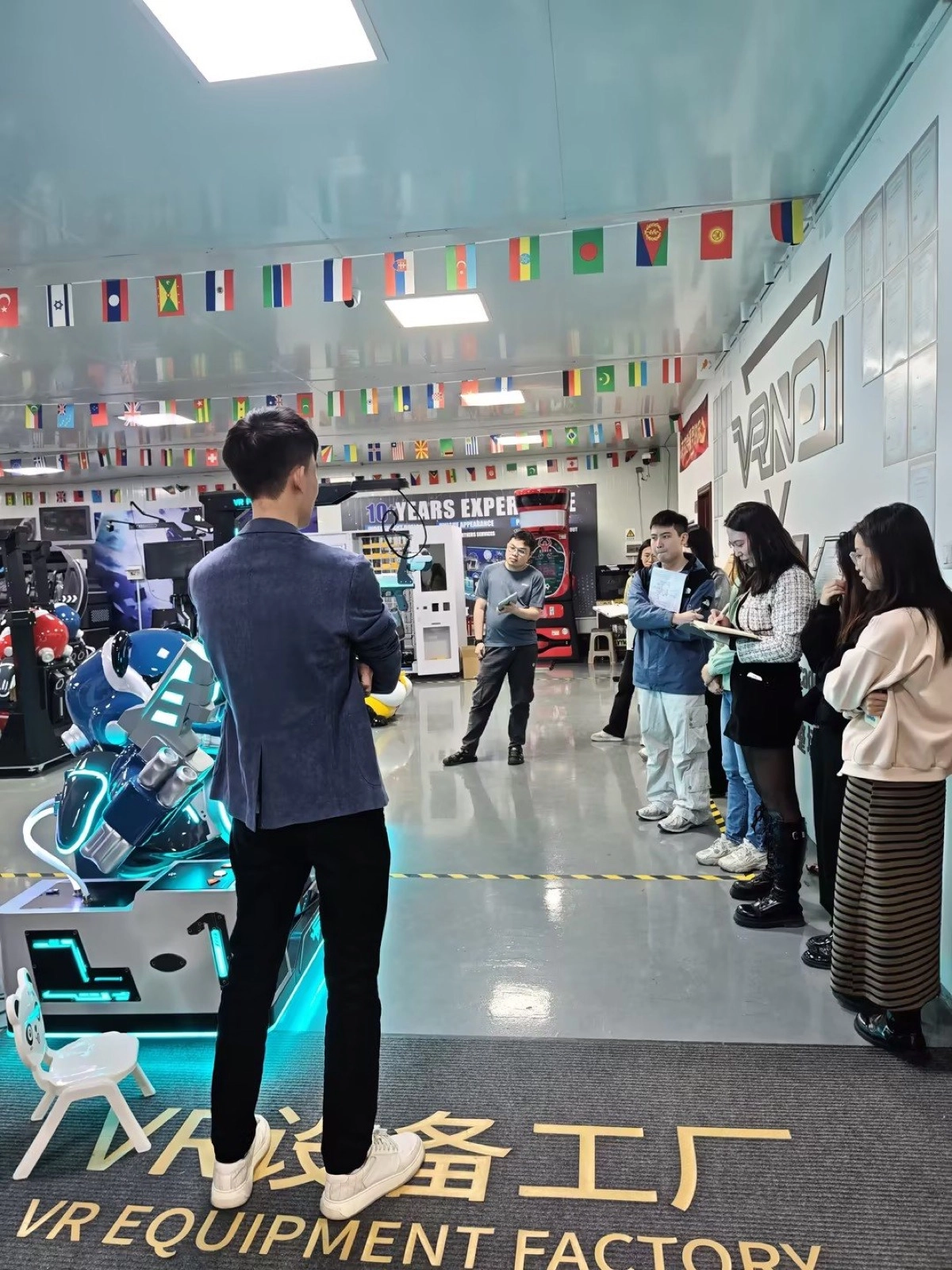
When Customers Say an Arcade Game Is Not Fun: 8 Things to Check
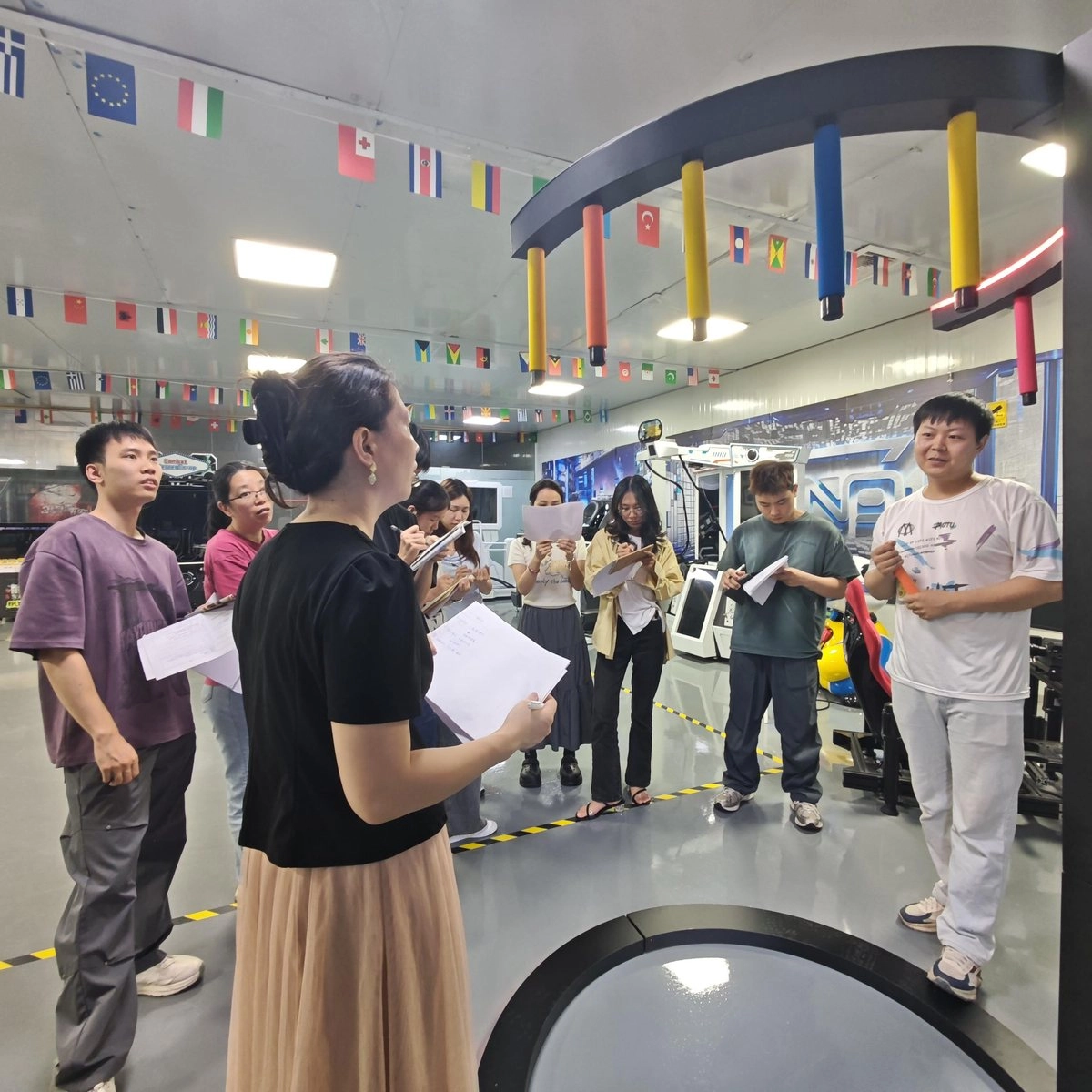
Arcade Machine Maintenance Checklist: Daily, Weekly and Monthly Tasks
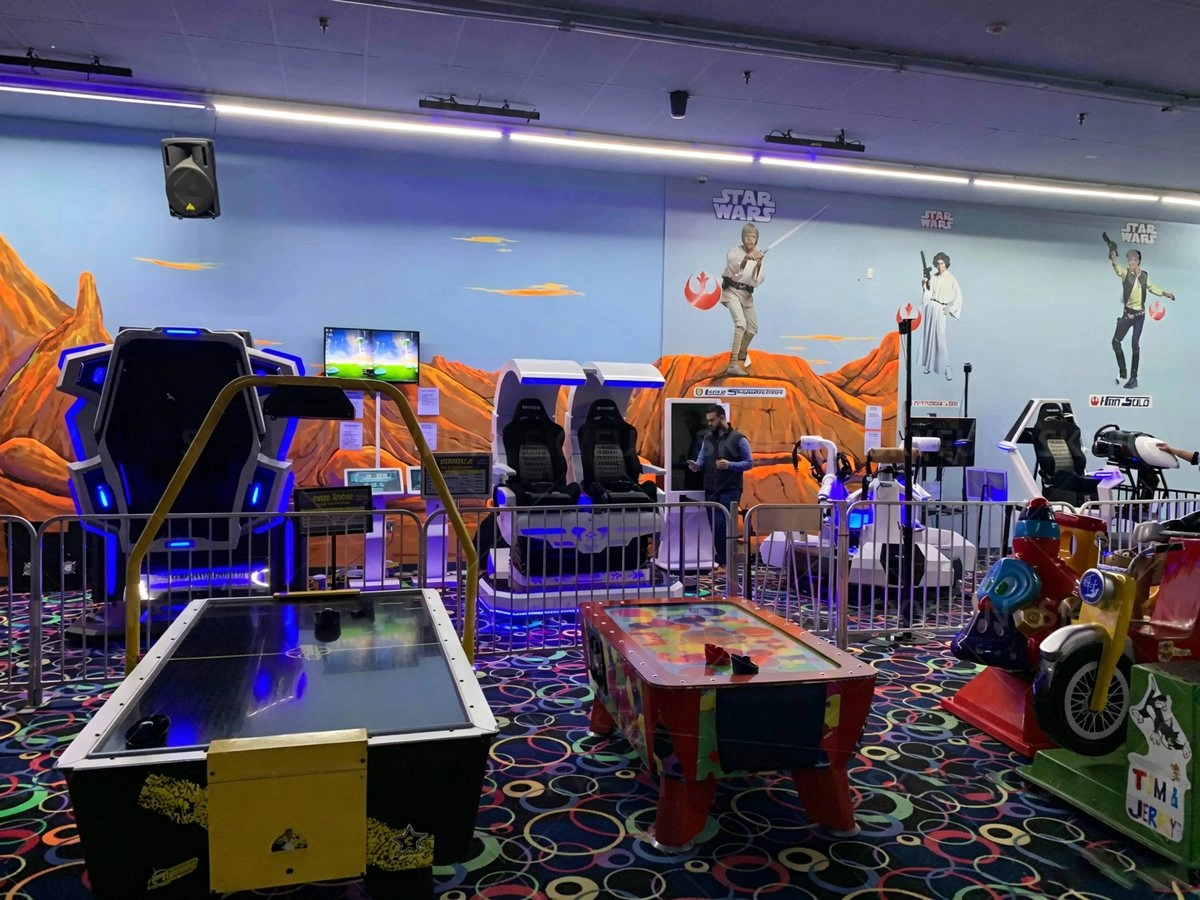
How to Build an Arcade Loyalty Program for Repeat Visits
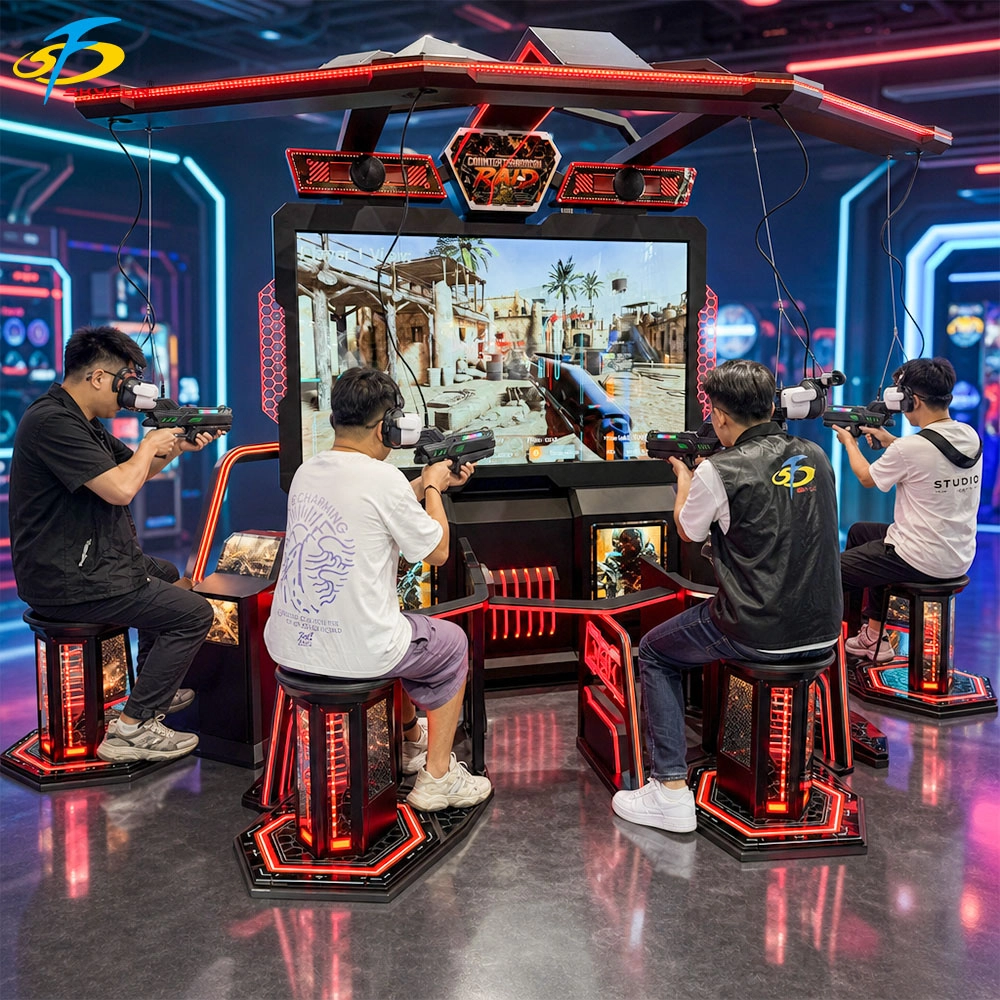
How to Measure Arcade Machine Performance: Revenue, Utilization and Downtime
How to Set Arcade Ticket Payout and Prize Cost for Redemption Games
 Scan QR Code
Whatsapp: +8618127818571
Scan QR Code
Guangzhou Skyfun Technology Co.,Ltd
skyfunvrgame
skyfun game