

Arcade Pre-Opening Checklist: Delivery to Trial Run
Preparing an arcade for opening involves more than switching on the machines. This practical checklist covers delivery inspection, installation, payment systems, staff training, safety checks and trial operation before opening day.
- Arcade Pre-Opening Timeline at a Glance
- 1. Inspect Every Machine When It Arrives
- 2. Install the Equipment According to the Approved Layout
- 3. Test a Complete Game Cycle, Not Just the Start Screen
- 4. Verify Payment, Tickets and the Prize Counter
- 5. Train Staff for Normal Operation and Common Problems
- 6. Complete Safety, Cleaning and Customer-Flow Checks
- 7. Run a Controlled Trial Operation
- 8. Carry Out a Final Opening-Day Walkthrough
- A Practical Example: Skyfun's Guilin Arcade Project
- How Skyfun Supports Arcade Opening Preparation
- Frequently Asked Questions
- How long should an arcade trial operation last?
- Who should complete the final equipment acceptance?
- What information should be recorded during testing?
- Prepare Early for a Smoother Arcade Opening
Preparing an arcade for opening involves more than switching on the machines. The venue must check equipment delivery, installation, payment systems, ticket and prize settings, staff training, safety procedures and customer flow before the first full business day.
A practical arcade opening checklist helps different teams work toward the same deadline. It also gives the operator time to find problems during a controlled trial run instead of discovering them in front of a large opening-day crowd.
The schedule below is a planning reference for a new arcade or family entertainment center. The exact timing should be adjusted according to the project size, shipping schedule, local requirements and number of machines.
Arcade Pre-Opening Timeline at a Glance
| Suggested Timing | Main Task | What to Confirm |
|---|---|---|
| 30 days or earlier | Site and delivery preparation | Final layout, power, network, delivery route, installation team and opening schedule |
| About 14 days before opening | Delivery and acceptance inspection | Machine models, quantities, packaging condition, accessories and spare parts |
| About 7 days before opening | Installation and system testing | Controls, displays, audio, payment, tickets, game cycles and linked functions |
| About 3 days before opening | Staff and operating preparation | Training, cleaning, prize stock, queue routes, safety checks and issue reporting |
| One to two days before opening | Trial operation | Customer flow, transaction accuracy, machine stability and staff response |
| Opening day | Final walkthrough | Start-up check, cash and card systems, staffing, cleanliness and emergency access |
1. Inspect Every Machine When It Arrives
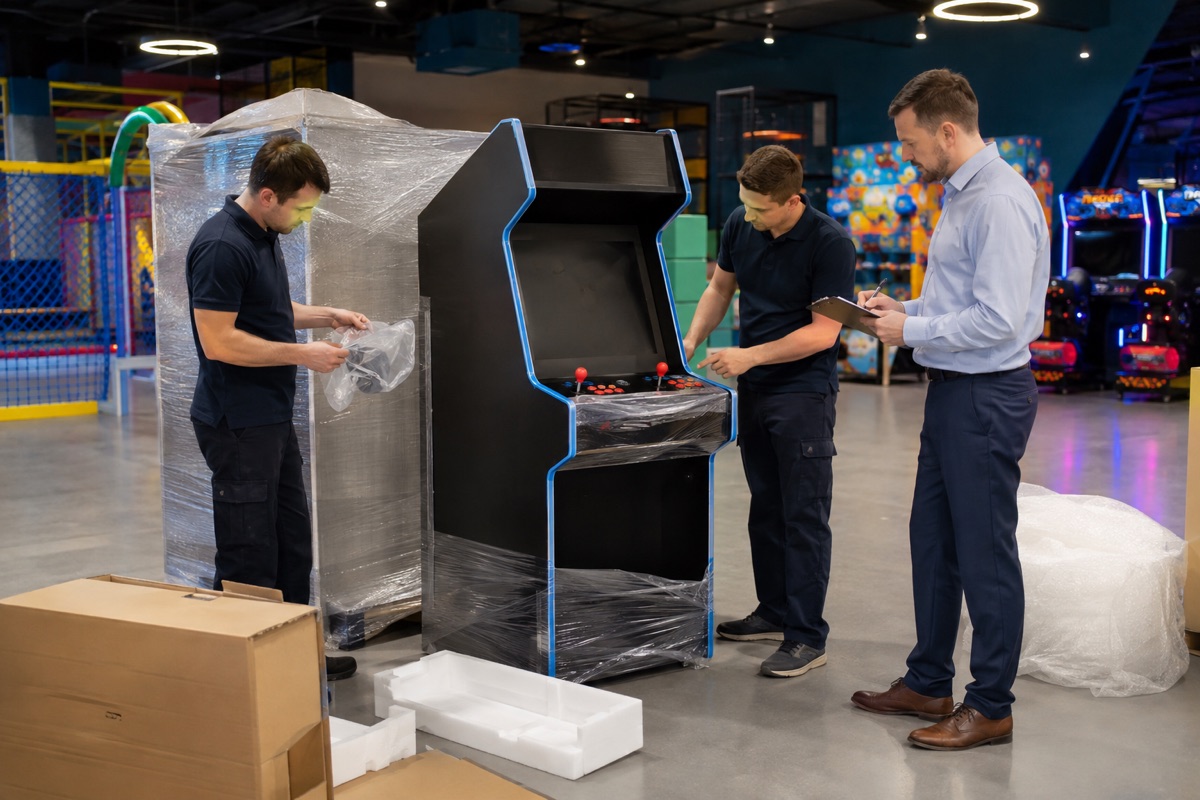
Equipment acceptance should begin before the packaging is completely removed. Check the number of packages against the packing list, photograph their condition and record any visible impact, water marks or other shipping concerns.
After unpacking, confirm:
• The model and quantity of each arcade machine
• The condition of the cabinet, screen, controls, seats and decorative parts
• Keys, cables, controllers, sensors and other included accessories
• Commonly used spare parts and maintenance items listed in the order
• Manuals, software information and installation documents
If a package or cabinet appears damaged, keep the original evidence and contact the supplier or freight partner promptly. A clear photo record makes it easier to identify whether an issue happened during transport, installation or later operation.
2. Install the Equipment According to the Approved Layout
Machines should be placed according to the final floor plan rather than wherever an outlet happens to be available. The layout should keep main walkways open, separate active play areas and leave enough room for players, staff, queues and routine maintenance.
Before powering on all equipment, the local technical team should confirm that outlets, voltage, grounding and circuit capacity match the machine specifications. Network points should also be tested for machines that use online updates, multiplayer connections, remote support or integrated payment systems.
During installation, check that each cabinet is stable and level. Moving or high-energy machines may need additional operating clearance, barriers or anchoring according to the supplier's installation instructions and local safety requirements.
3. Test a Complete Game Cycle, Not Just the Start Screen
A machine that turns on is not automatically ready for customers. Each game should be tested from payment through game selection, player operation and final result.
The testing team should check:
• Start-up and shutdown procedures
• Screens, lights, speakers and visual effects
• Buttons, joysticks, steering wheels, pedals, guns and sensors
• Seat movement, restraints and emergency stop functions where applicable
• Game loading, scoring and end-of-game results
• Ticket output, prize output or stored credit
• Linked play between multiple machines where applicable
Record every problem in one shared issue list. Include the machine name, time, symptoms, photos or video, action taken and final result. This avoids repeated troubleshooting and helps the supplier's technical team understand the problem more quickly.
4. Verify Payment, Tickets and the Prize Counter
Payment problems can stop revenue even when the game itself works correctly. Test every payment method that the venue plans to use, including coins, tokens, rechargeable cards or mobile payment where supported.
Use several real test transactions and confirm that the charged amount, remaining balance and game credits are correct. The staff should also know what to do when a customer is charged but the game does not start.
For redemption games, check the ticket settings and confirm that the prize counter is ready. Prize values, ticket requirements and inventory records should be clear before customers begin collecting tickets. Keep extra ticket rolls, receipt paper and other daily consumables in an organized storage area.
5. Train Staff for Normal Operation and Common Problems
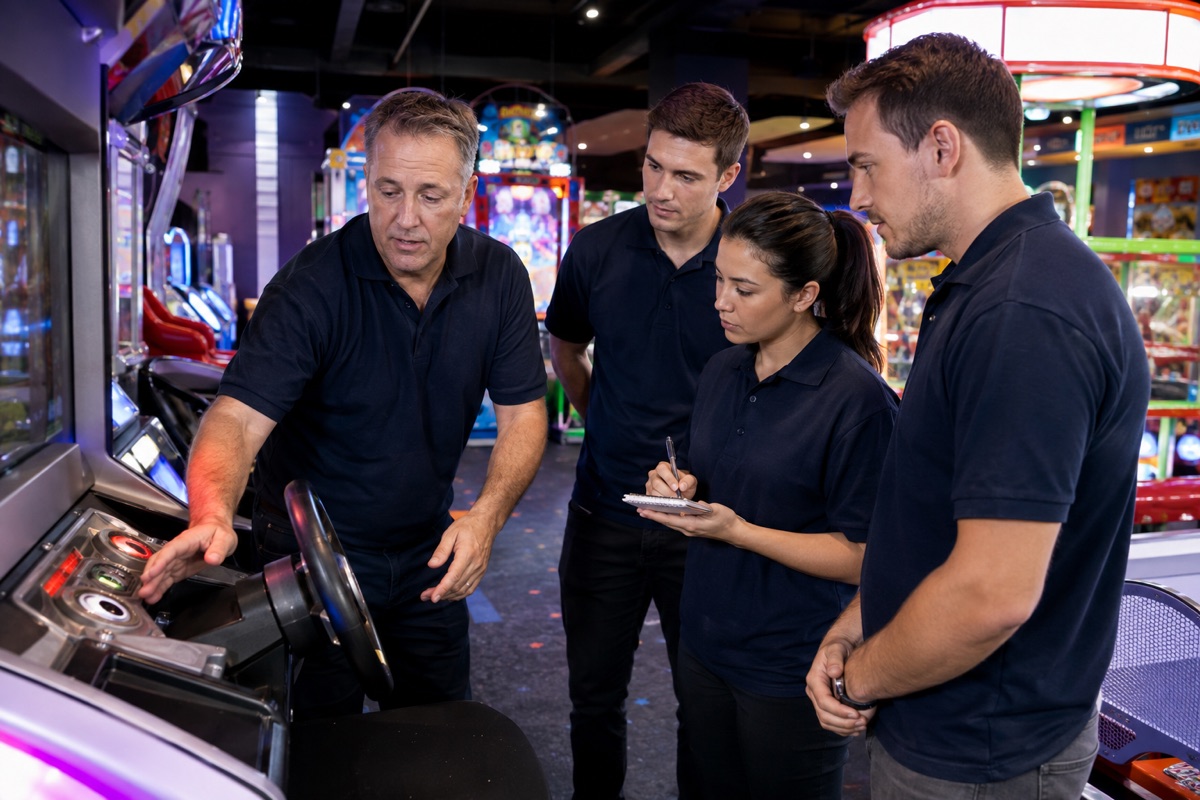
Every shift should include people who understand the basic operating process. Staff do not need to perform advanced repairs, but they should be able to guide customers, carry out daily checks and collect useful information when a problem occurs.
Pre-opening training should cover:
• Daily start-up and shutdown
• Player instructions and game rules
• Age, height or use restrictions provided for each machine
• Pre-use safety checks and correct use of restraints
• Cleaning of shared controls, seats and wearable accessories
• Simple restart and first-line troubleshooting procedures
• When to stop a machine and contact technical support
• How to record customer complaints, refunds and operating incidents
A short written procedure at the staff desk can be useful during the first weeks of operation. It keeps the response consistent even when an experienced manager is not standing beside the machine.
6. Complete Safety, Cleaning and Customer-Flow Checks
Walk through the venue as if you were a first-time customer. The route from entrance to payment, machines, prize counter and exit should be easy to understand. Queues should not block emergency routes or cross the operating area of moving equipment.
Before the trial run, confirm:
• Emergency exits and main walkways remain clear
• Moving machines have the required safety clearance and separation
• Power cables and network cables do not create trip hazards
• Queue lines and spectator areas are clearly arranged
• Cleaning materials are available and staff know how to use them safely
• Storage areas keep customer belongings away from equipment
• Local fire, building and operating requirements have been checked by the responsible professionals
7. Run a Controlled Trial Operation
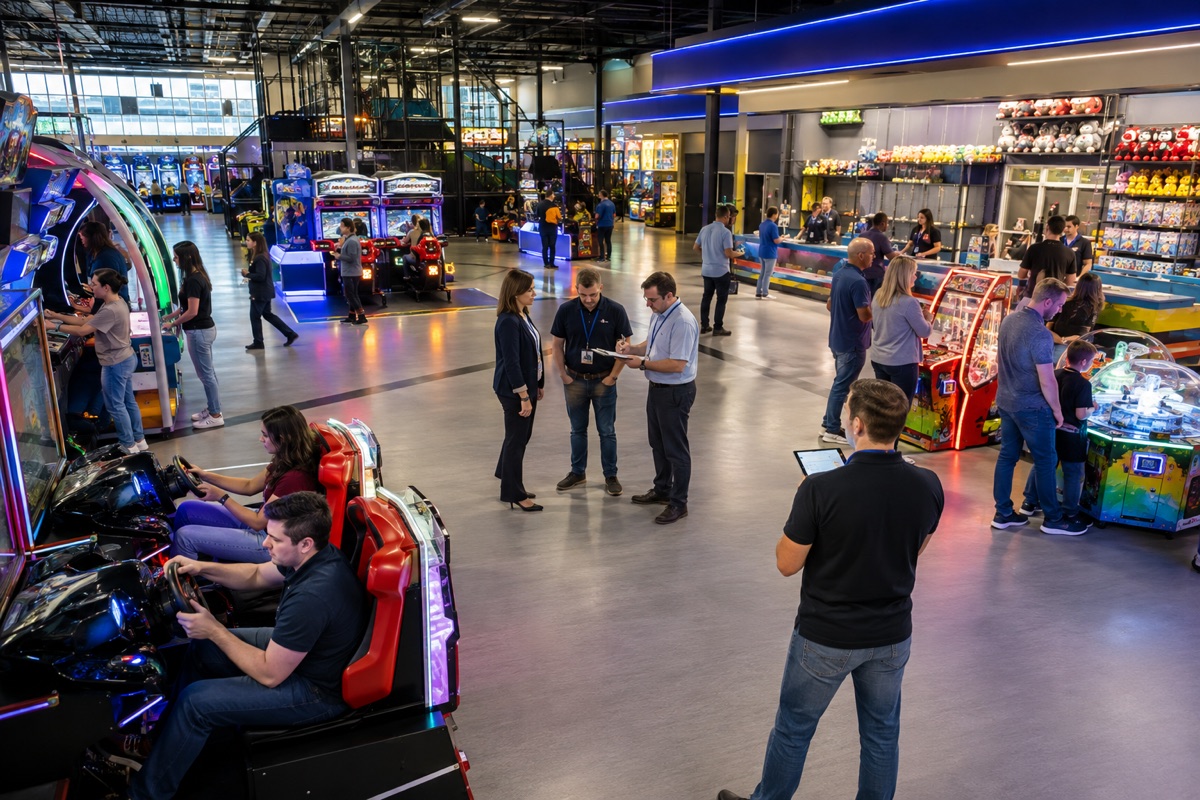
A trial operation should reproduce a normal customer journey with a smaller, manageable group. Invite staff members, partners or a limited number of test customers to buy credits, choose games, join queues, redeem prizes and ask for help.
During the trial, record:
• Which machines attract attention first
• Where queues or customer-flow conflicts appear
• Whether payment and ticket records remain accurate
• How long staff take to explain each game
• Machine errors, restarts and temporary downtime
• Customer questions that are not covered by current signs or staff scripts
• Whether cleaning and reset procedures work during busy periods
The purpose of the trial is not to make the venue look perfect. It is to discover small problems while there is still time to correct the layout, settings, staff schedule or operating procedure.
8. Carry Out a Final Opening-Day Walkthrough
Before the doors open, one responsible manager should complete a final walkthrough and sign off the main operating areas.
• All scheduled machines have started correctly
• Payment, cards, tokens and ticket systems are available
• The prize counter and consumables are fully prepared
• Machines, floors, headsets and customer areas are clean
• Staff positions, breaks and technical contacts are confirmed
• Queues, barriers and emergency routes are in place
• The issue log from the trial operation has been reviewed
A Practical Example: Skyfun's Guilin Arcade Project
Skyfun's 3,000㎡ arcade center project in Guilin included floor planning, equipment supply, on-site positioning, installation, system testing and staff training.
Before the venue entered operation, the team checked the machines under real operating conditions and trained local staff in start-up, shutdown, player guidance, cleaning, basic troubleshooting and routine inspection. This type of coordinated handover helps the operating team become familiar with the venue before serving a full customer load.
How Skyfun Supports Arcade Opening Preparation
Skyfun can support arcade and FEC projects through equipment selection, floor planning, 3D design, production coordination, installation, testing and staff training. The service scope can be adjusted according to the venue size, equipment mix and local project requirements.
For a more efficient opening plan, prepare the venue floor plan, final equipment list, delivery information, target opening date and local technical contacts in advance. Clear information allows the supplier, installer and venue team to work from the same schedule.
Frequently Asked Questions
How long should an arcade trial operation last?
There is no single duration for every venue. A small arcade may complete useful testing within one or two controlled days, while a large FEC may need a longer staged process. Continue until the main payment, game, staffing and safety issues have been tested under realistic use.
Who should complete the final equipment acceptance?
The venue manager, supplier or installer and the relevant local technical staff should participate. Responsibilities should be agreed before delivery so that electrical, installation, software and shipping issues are directed to the correct person.
What information should be recorded during testing?
Record the machine name, test time, payment method, game result, error symptoms, action taken and final status. Photos and short videos are especially useful when remote technical support is required.
Prepare Early for a Smoother Arcade Opening
A successful opening depends on preparation across the whole venue. Inspect the delivery, test complete game cycles, verify payment and ticket systems, train the staff, check safety and run a controlled trial before the first busy day.
If you are preparing a new arcade or family entertainment center, send Skyfun your floor plan, equipment requirements, budget and target opening date. Our team can help organize a practical project and pre-opening plan for your venue.
Application
What hardware equipment is required for VR games?
Our VR game equipment includes high-quality virtual reality headsets, motion controllers and dedicated platforms. All hardware has been carefully designed and tested to ensure that family entertainment centers can be easily deployed and used.
What should I do if there is a problem with the equipment?
If the VR device fails, you can submit the question through our customer support system or contact our after-sales service team. We will provide you with a solution as soon as possible, including equipment maintenance, replacement parts, etc., to ensure that your business operations are not interrupted.
What age groups are suitable for VR games in family entertainment centers?
skyfun's VR equipment supports a wide range of age groups, from children, teenagers to adults. We provide a variety of game types, including parent-child interactive games, adventure games, sports competitions, etc., to ensure that they are suitable for the needs of different family members.
Distributors
What are the unique features of skyfun's products?
skyfun's VR equipment uses the latest technology to provide excellent immersion and interactivity. Our equipment is uniquely designed to meet global market needs and undergoes strict quality control to ensure long-term reliability of each device.
Aracde Game Machine
What is Skyfun's standard delivery time for arcade machines?
For in-stock arcade machines, Skyfun's standard delivery time is typically 7-15 working days from order confirmation and receipt of payment. This timeframe covers final quality checks, secure packaging at our Guangzhou facility, and handover to the carrier. Customized, OEM or large-batch orders require additional production lead time (usually longer than 7-15 working days) depending on specifications. As a supplier with over 10 years' experience, exports to 100+ countries, rigorous QC and 24/7 support, we provide tracking details and pre-shipment verification to ensure reliable and timely delivery. For precise ETAs to your country and shipping options, please contact us at sunnyzhang@skyfungame.com or visit https://www.skyfungame.com.
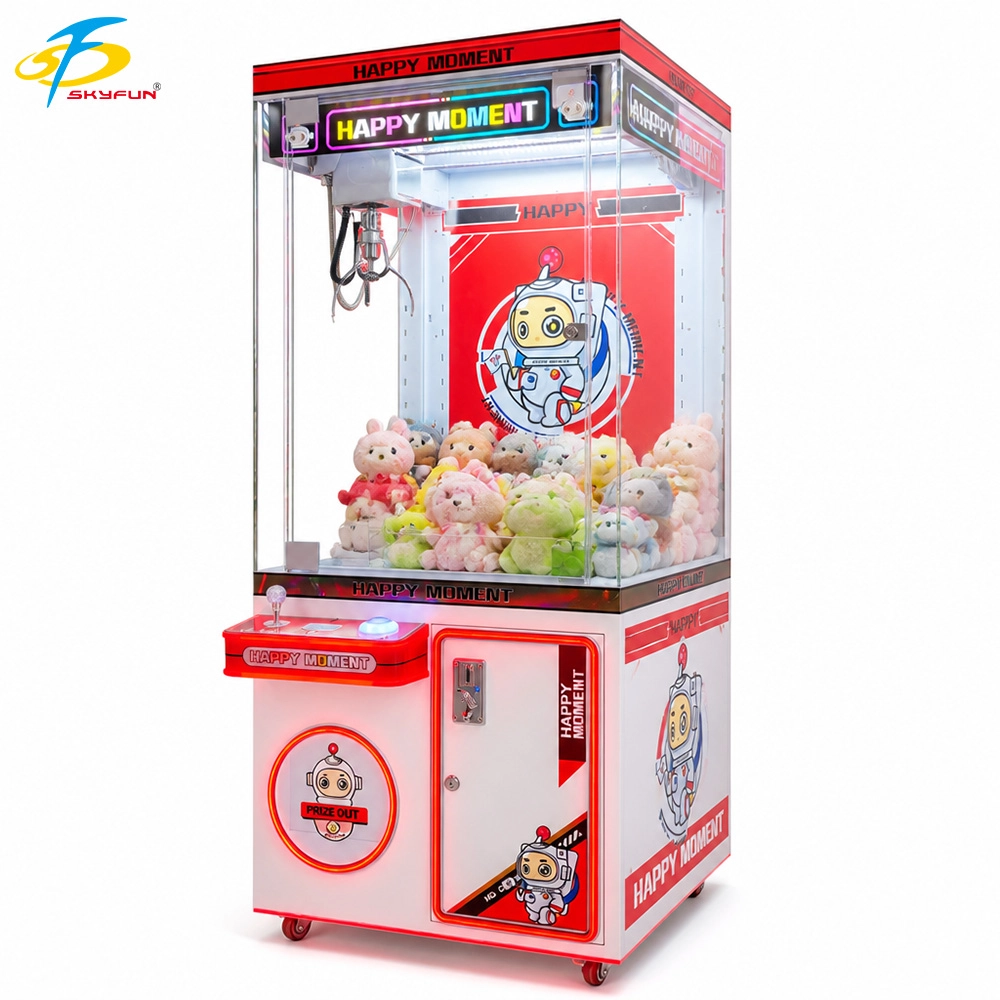
The Skyfun Happy Moment Commercial Red Claw Machine brings prize-catching entertainment to malls, cinema lobbies, arcades and family amusement venues. A cold-rolled steel cabinet and all-metal gantry combine with RGB lighting, stereo sound and crystal joystick controls. Smart mainboard settings and three-stage voltage-controlled claw grip help operators configure play for different prizes. Coin, bill, card and Nayax-compatible payment options, custom graphics and cabinet colors are available to suit your market.
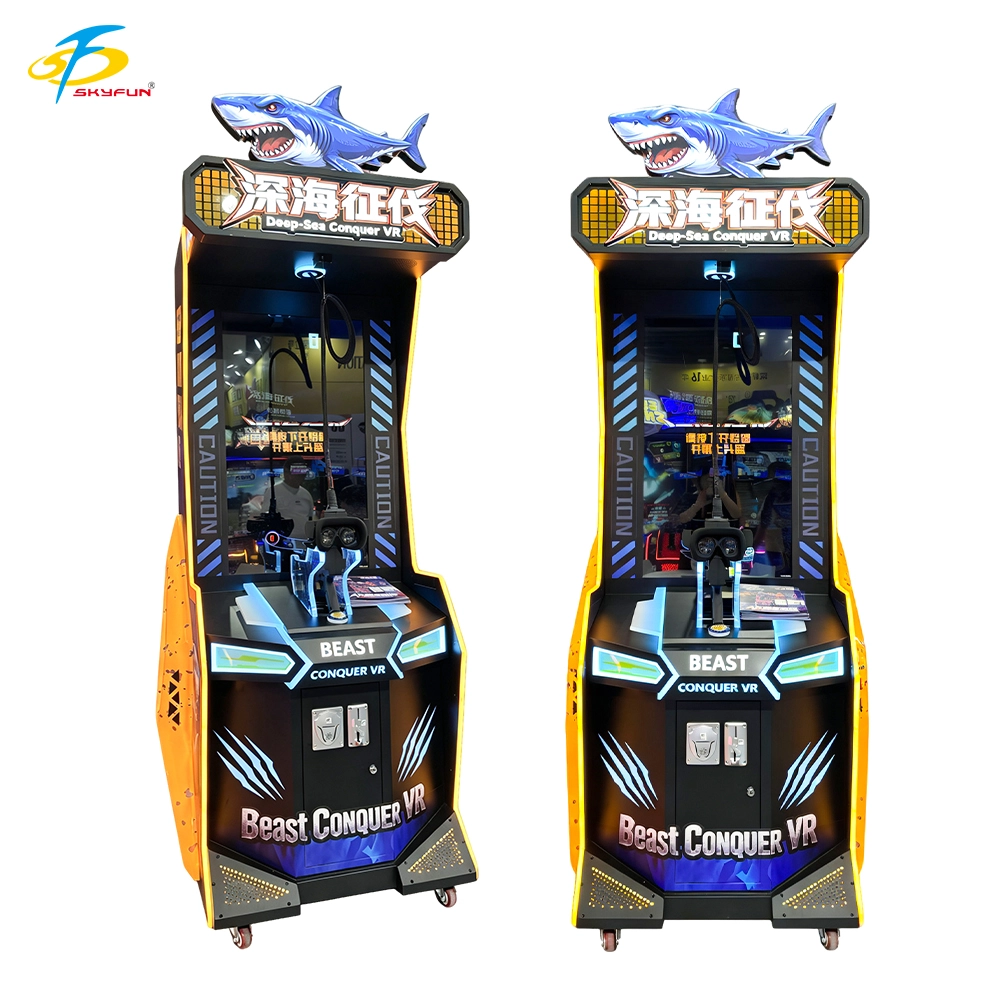
Skyfun Deep-Sea Conquer is a VR shooting arcade machine featuring four game scenarios, from defending supplies and battling a bat boss to exploring coral waters and the deep sea. Players aim, shoot and collect different in-game weapons while following score and ammunition indicators. A 43-inch display presents the action, and operator settings support free-play or coin-operated sessions, adjustable coins per game and revenue statistics.
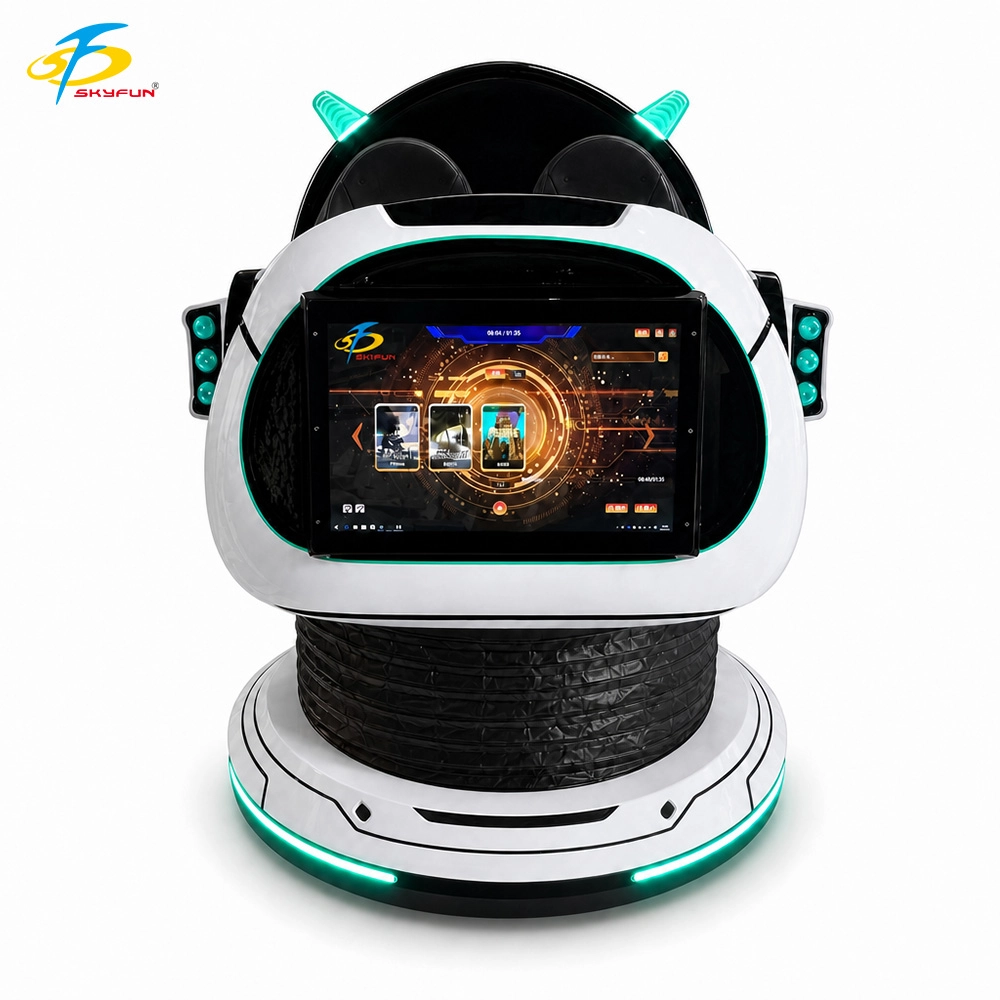
Skyfun 360 Rotating Panda is a two-seat VR motion simulator for commercial entertainment venues. Its crank-driven platform combines dynamic movement with 360-degree rotation, while a fiberglass panda-inspired body and illuminated accents create a distinctive attraction. A 42-inch external display shows the gameplay and supports operator control, and a 13-inch touchscreen lets players select their experience. Designed for VR centers, shopping malls and family entertainment centers.
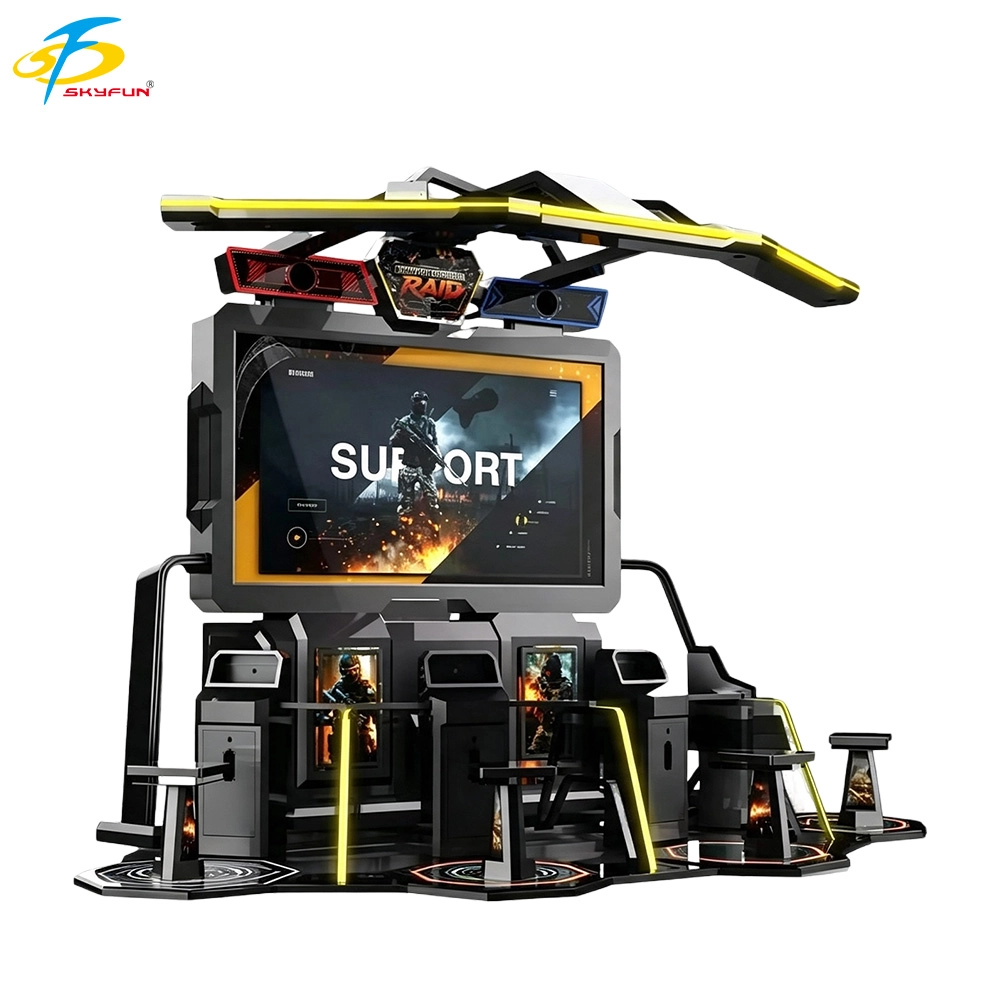
Skyfun Counter Terrorism Raid is a four-player VR shooting simulator for arcades, VR centers and family entertainment venues. Players experience story-driven missions in desert and harbor environments with a variety of in-game weapons, vehicles and interactive scenery. PICO VR headsets, recoil controllers and vibration seats complement the action, while the large external screen lets spectators follow the gameplay.
Want to know more updates?
If you have any technical questions or after-sales needs, please feel free to contact our service team.
We will wholeheartedly provide you with quick response and professional support to ensure the smooth operation of your VR & Arcade project.
 Scan QR Code
Whatsapp: +8618127818571
Scan QR Code
Guangzhou Skyfun Technology Co.,Ltd
skyfunvrgame
skyfun game