
Everything You Should Know About VR Flight Simulators
Discover everything you should know about VR flight simulators with skyfun. Explore the latest innovations, benefits, and applications of VR flight simulators to enhance your training and entertainment experience. Learn more with skyfun today!
Introduction
Imagine soaring thousands of feet above the ground, controlling a sleek jet or a vintage propeller plane, all without leaving your living room. Thanks to the remarkable advancements in virtual reality (VR) technology, VR flight simulators have made this dream accessible to everyone—from aspiring pilots to gaming enthusiasts. But how does this technology work, and what makes it so compelling? Let’s dive deep into the world of VR and flight simulation and explore what you need to know before taking off.
What Is a VR Flight Simulator
Unlike arcade-style experiences, professional VR flight simulators focus on realism, simulating everything from aerodynamic forces to weather conditions. Some advanced setups even synchronize motion platforms to VR visuals for added realism.

How VR Flight Simulators Work
At the core of any VR flight simulator is the integration of several technologies:
VR Headsets: Devices like Meta Quest 3, HP Reverb G2, and Pimax Crystal provide high-resolution stereoscopic views of the virtual cockpit.
Motion Tracking: Sensors track your head and hand movements in real-time, allowing natural control interaction.
Flight Peripherals: Yokes, joysticks, throttle quadrants, and rudder pedals connect to the simulator to mirror real-world cockpit operations.
Simulation Software: Titles like Microsoft Flight Simulator 2024 and X-Plane 12 bring detailed landscapes, realistic aircraft physics, and real-time weather into your virtual skies.
The synchronization between hardware and software enables you to experience flight dynamics like turbulence, stall recovery, or complex navigation procedures almost as if you were piloting a real plane.
Main Types of VR Flight Simulators
There isn’t just one type of VR flight simulator—different setups cater to different needs:
Entertainment-Oriented Simulators: Focused on accessibility and fun, these VR flight simulator games often offer less technical complexity but higher visual engagement.
Training Simulators: Used by aviation schools and military institutions, these systems emphasize technical accuracy, aircraft systems management, and emergency procedures.
Combat Flight Simulators: Titles like DCS World VR offer realistic military aviation experiences, simulating fighter jets, helicopters, and tactical missions.
Professional Full-Motion Simulators: High-end platforms where the seat or cockpit moves in sync with the VR visuals to simulate G-forces and maneuvers.
Each type serves different user bases—from casual gamers seeking the best VR flight simulator experience to professional pilots undergoing training.
Benefits of Using a VR Flight Simulator
VR flight simulators bring a wide range of advantages:
Cost-Effective Training: Compared to traditional fixed-base simulators or real-world flight hours, VR setups are significantly more affordable.
Enhanced Immersion: The feeling of "being there" dramatically improves learning retention and muscle memory.
Safety: Pilots can practice emergency scenarios like engine failure or adverse weather in a safe, controlled environment.
Accessibility: No pilot's license required! Anyone can enjoy the thrill of flying.
Customization: With a broad range of aircraft, airports, and weather conditions available, users can tailor their experience according to their interests or training goals.
In gaming, flight simulator VR experiences offer unmatched realism that other genres can hardly replicate.

5. Choosing the Right Hardware for VR Flight Simulation
Choosing the right setup is crucial for maximizing your VR flight simulator experience.
VR Headset: For best results, opt for a headset with high resolution, a wide field of view, and reliable tracking (e.g., Pimax Crystal or Varjo Aero for premium users). VR
Flight Controls: A good joystick, throttle, and rudder pedal set dramatically improve realism. Entry-level setups like the Logitech X56 or high-end systems like the Honeycomb Alpha Flight Controls are popular choices.
PC Specifications: Flight simulation is resource-heavy. A GPU like the RTX 4080, 32GB RAM, and a high-refresh monitor for mirrored views are recommended.
Comfort Accessories: Consider a dedicated VR chair with force feedback or a motion platform for ultra-immersive sessions.
Choosing wisely ensures you fully enjoy VR flight simulator games without interruptions or discomfort.
6. Common Challenges and Tips
Using a VR flight simulator isn't without its challenges:
Motion Sickness: Beginners often feel nausea. Start with shorter sessions, enable comfort settings, and gradually build tolerance.
Learning Curve: Realistic simulators require practice. Focus on basic maneuvers before attempting complex flight plans.
System Calibration: Properly configuring tracking, controls, and software is critical to avoid immersion-breaking glitches.
Room Setup: Ensure enough physical space to prevent accidental bumps while reaching for virtual cockpit switches.
Overcoming these initial hurdles unlocks the full magic of flight simulator VR.
7. The Future of VR Flight Simulators
The horizon looks thrilling for VR and flight simulation technologies.
Haptic Feedback Systems: Gloves and wearable suits that simulate tactile feedback when operating virtual controls.
Full-Motion Rigs: Affordable platforms that simulate aircraft movement, offering G-force simulation for consumers.
Cloud-Based VR: Services offering high-quality simulations via streaming, reducing hardware costs.
Artificial Intelligence: Smarter virtual co-pilots, ATC communications, and dynamic weather systems.
As technology evolves, the best VR flight simulator experiences will only become more accessible and lifelike.
8. Conclusion
VR flight simulators represent the cutting edge of immersive aviation experiences, bridging the gap between real-world piloting and virtual entertainment. Whether you're dreaming of being a pilot, enhancing professional skills, or just seeking a new adventure, there's never been a better time to explore the skies virtually. With the right setup and a bit of practice, you can experience the thrill of flight like never before.
Distributors
How does skyfun support dealers' marketing efforts?
We provide a range of marketing materials, including product brochures, online advertising templates and promotional support. In addition, our team will help you develop a marketing strategy that suits the local market.
How to become a skyfun dealer?
You can start the application by visiting our website and filling out the dealer application form. Our team will evaluate your application upon receipt and contact you for further communication.
What is the warranty policy for skyfun products?
All skyfun equipment enjoys a certain period of warranty service, which depends on the product type and cooperation agreement. During the warranty period, if the equipment fails, we will provide free repair or replacement service.
Application
What technical support does skyfun provide?
We provide 24/7 technical support services, including remote technical consultation, equipment troubleshooting, software upgrades, and faulty equipment replacement. Ensure that your equipment can continue to operate efficiently and improve customer experience.
About Skyfun
What types of virtual reality solutions do you offer?
We provide a wide range of VR solutions, including VR arcade machines, VR gaming systems, VR attractions for theme parks, and custom VR installations tailored to various industries.
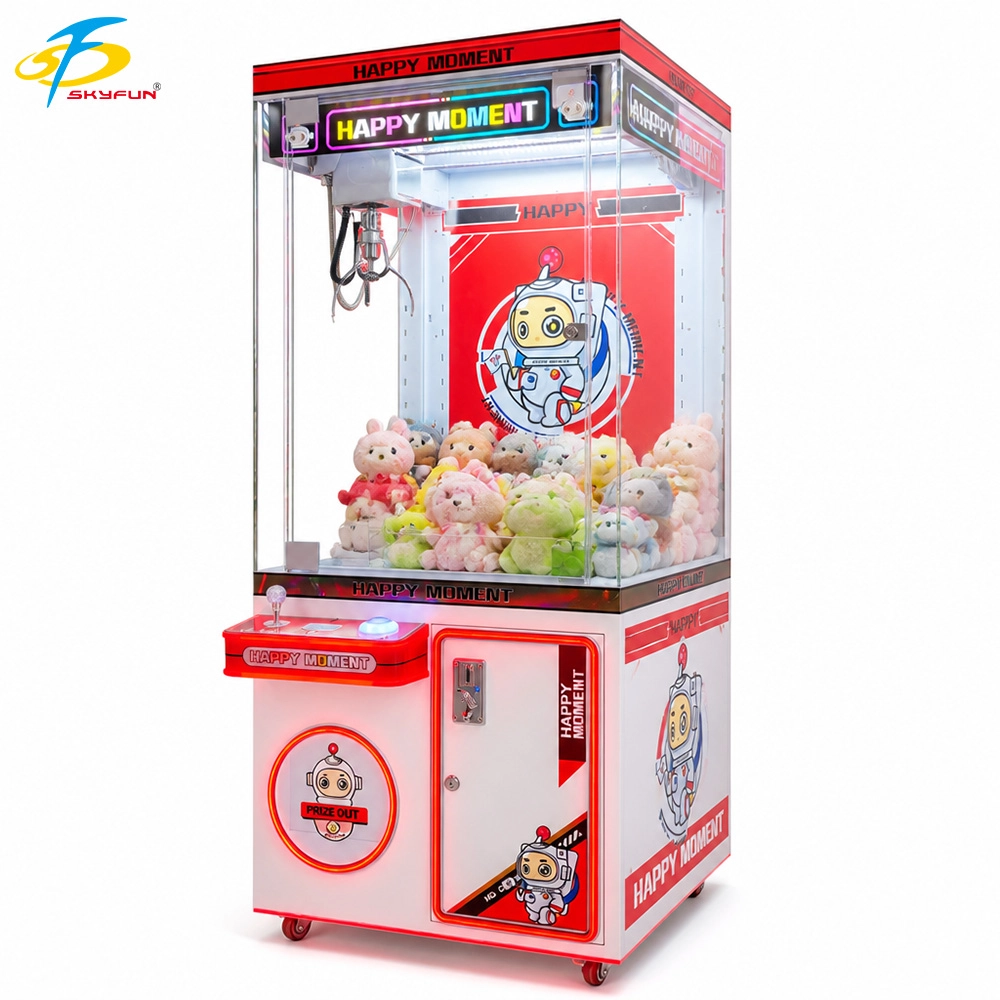
The Skyfun Happy Moment Commercial Red Claw Machine brings prize-catching entertainment to malls, cinema lobbies, arcades and family amusement venues. A cold-rolled steel cabinet and all-metal gantry combine with RGB lighting, stereo sound and crystal joystick controls. Smart mainboard settings and three-stage voltage-controlled claw grip help operators configure play for different prizes. Coin, bill, card and Nayax-compatible payment options, custom graphics and cabinet colors are available to suit your market.
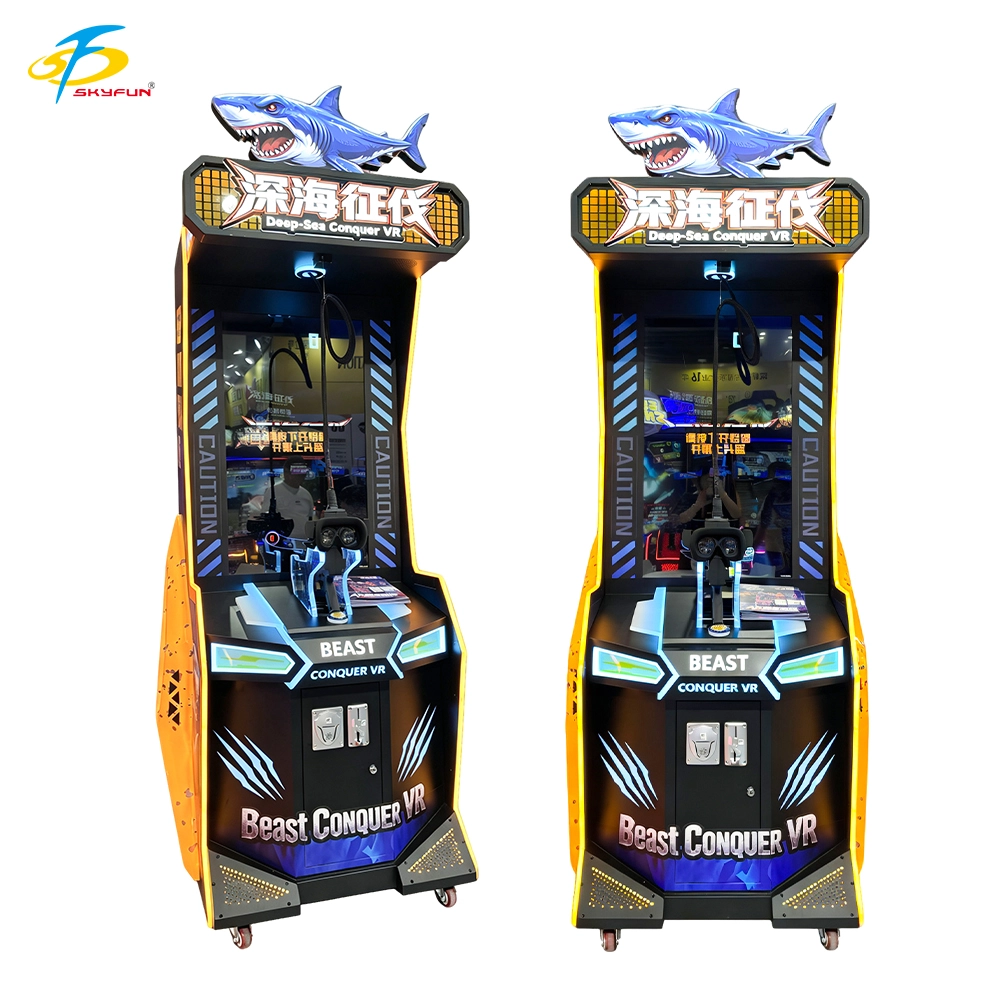
Skyfun Deep-Sea Conquer is a VR shooting arcade machine featuring four game scenarios, from defending supplies and battling a bat boss to exploring coral waters and the deep sea. Players aim, shoot and collect different in-game weapons while following score and ammunition indicators. A 43-inch display presents the action, and operator settings support free-play or coin-operated sessions, adjustable coins per game and revenue statistics.
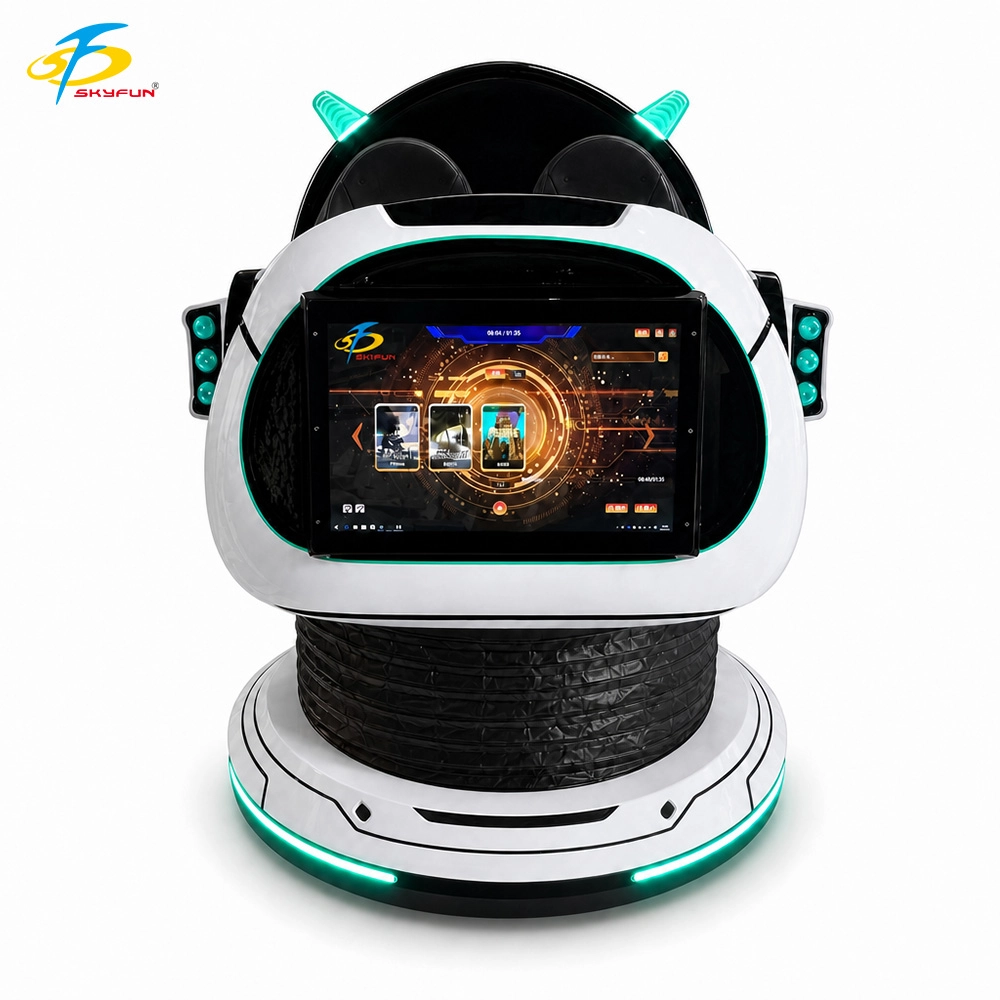
Skyfun 360 Rotating Panda is a two-seat VR motion simulator for commercial entertainment venues. Its crank-driven platform combines dynamic movement with 360-degree rotation, while a fiberglass panda-inspired body and illuminated accents create a distinctive attraction. A 42-inch external display shows the gameplay and supports operator control, and a 13-inch touchscreen lets players select their experience. Designed for VR centers, shopping malls and family entertainment centers.
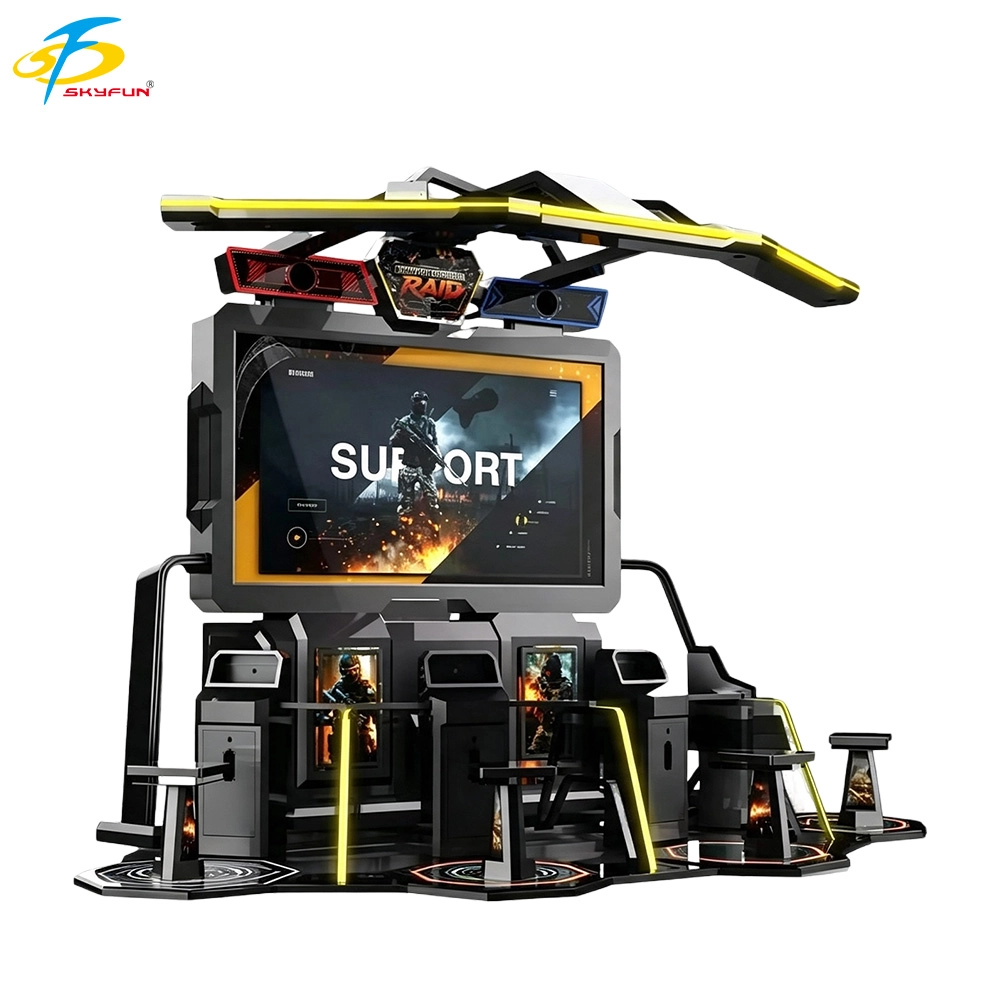
Skyfun Counter Terrorism Raid is a four-player VR shooting simulator for arcades, VR centers and family entertainment venues. Players experience story-driven missions in desert and harbor environments with a variety of in-game weapons, vehicles and interactive scenery. PICO VR headsets, recoil controllers and vibration seats complement the action, while the large external screen lets spectators follow the gameplay.
Want to know more updates?
If you have any technical questions or after-sales needs, please feel free to contact our service team.
We will wholeheartedly provide you with quick response and professional support to ensure the smooth operation of your VR & Arcade project.
 Scan QR Code
Whatsapp: +8618127818571
Scan QR Code
Guangzhou Skyfun Technology Co.,Ltd
skyfunvrgame
skyfun game