
How to Price Arcade Games: Credits, Session Length and Payback
Learn how to price arcade games using equipment cost, session capacity and payback targets. This guide compares charging models for VR, racing, shooting, sports, redemption and multiplayer attractions.
- Collect the Right Data Before Setting Prices
- Three Basic Calculations for Arcade Machine ROI
- Use a Different Pricing Logic for Each Equipment Type
- Self-Service and Entry-Level VR
- Motion, Two-Player and Multiplayer VR
- Racing, Shooting and Sports Games
- Redemption and Gift Machines
- Per-Player Price or Full-Machine Price?
- Build Packages Without Hiding the Real Price
- Arcade Game Pricing Reference Table
- Test Prices During Trial Operation
- Frequently Asked Questions
- How often should arcade prices be reviewed?
- How do I estimate payback?
- Should every arcade machine use the same number of credits?
- Build a Pricing Plan for Your Venue
Arcade pricing is a balancing decision. If the price is too high, customers may hesitate or play less. If it is too low, a busy venue may still struggle to cover equipment, rent, staffing and maintenance.
A practical arcade game pricing plan connects customer value with the venue's financial target. Rather than copying a competitor, operators should calculate capacity, consider local spending habits and test each machine against the desired payback period.
Collect the Right Data Before Setting Prices
Begin with the total cost of putting each machine into operation, including purchase, shipping, import charges, installation, payment hardware, site preparation and initial spare parts.
Then collect the operating data that affects every play:
• Monthly rent, utilities, labor and marketing costs
• Estimated maintenance and consumable costs
• Game time plus loading, cleaning and reset time
• Number of players served in one session
• Expected weekday, weekend and holiday traffic
• Local spending level and nearby competitors
• Target payback period for the equipment investment
Three Basic Calculations for Arcade Machine ROI
The following formulas help operators connect price, capacity and payback. They can be applied in local currency.
| Calculation | Formula | Purpose |
|---|---|---|
| Hourly capacity | 60 ÷ total session cycle × simultaneous player capacity | Estimates the maximum number of paid players per hour |
| Required daily equipment revenue | Recoverable equipment cost ÷ target payback days | Shows the daily revenue target before operating costs |
| Required paid sessions | Required daily revenue ÷ average revenue per session | Tests whether the target is realistic for expected traffic |
A five-minute game may require seven minutes after entry, instructions and reset. Capacity should therefore use the full cycle, not only the time shown inside the game. Skyfun's ROI planning tools can help when comparing equipment and payback targets.
Use a Different Pricing Logic for Each Equipment Type
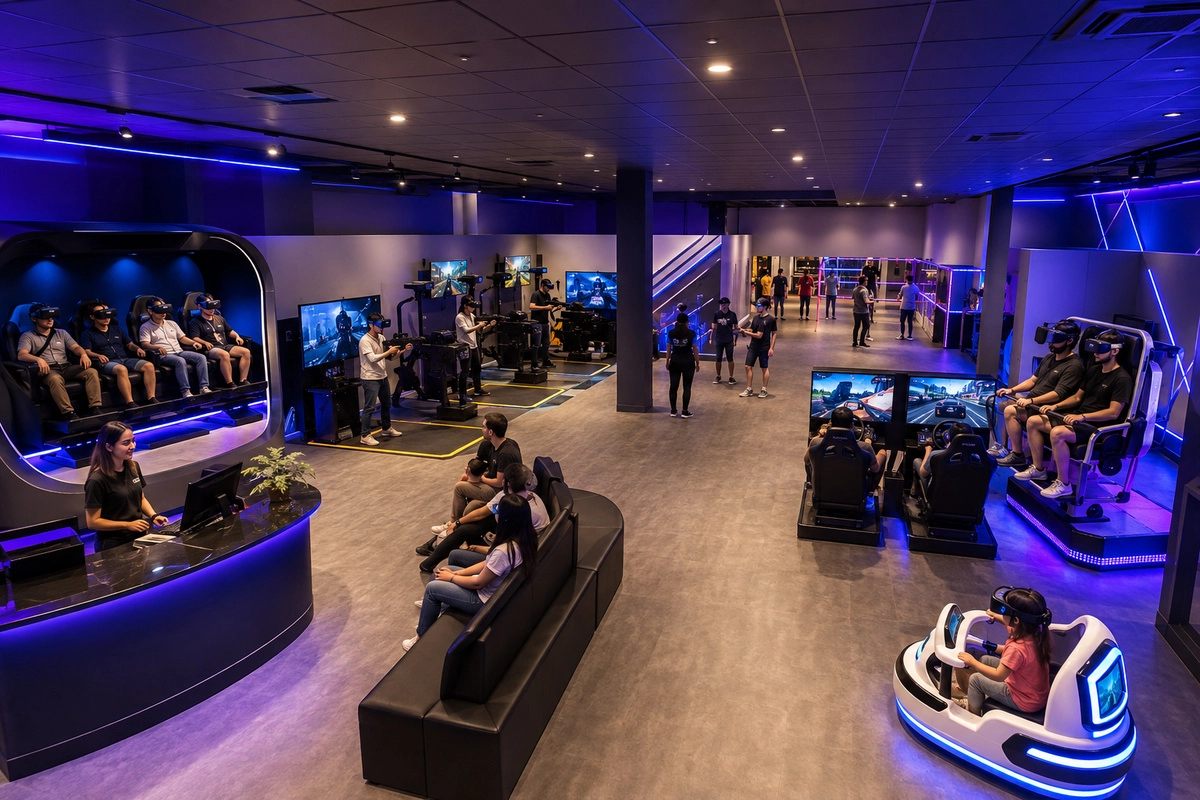
A strong FEC pricing strategy does not force every attraction into the same price. Customers understand that a short sports game, a motion VR ride and a private multiplayer session provide different experiences.
Self-Service and Entry-Level VR
Self-service VR and compact VR simulators suit a clear per-play price that encourages trials and repeat use. If staff must prepare every player, include that labor and reset time in the calculation.
Motion, Two-Player and Multiplayer VR
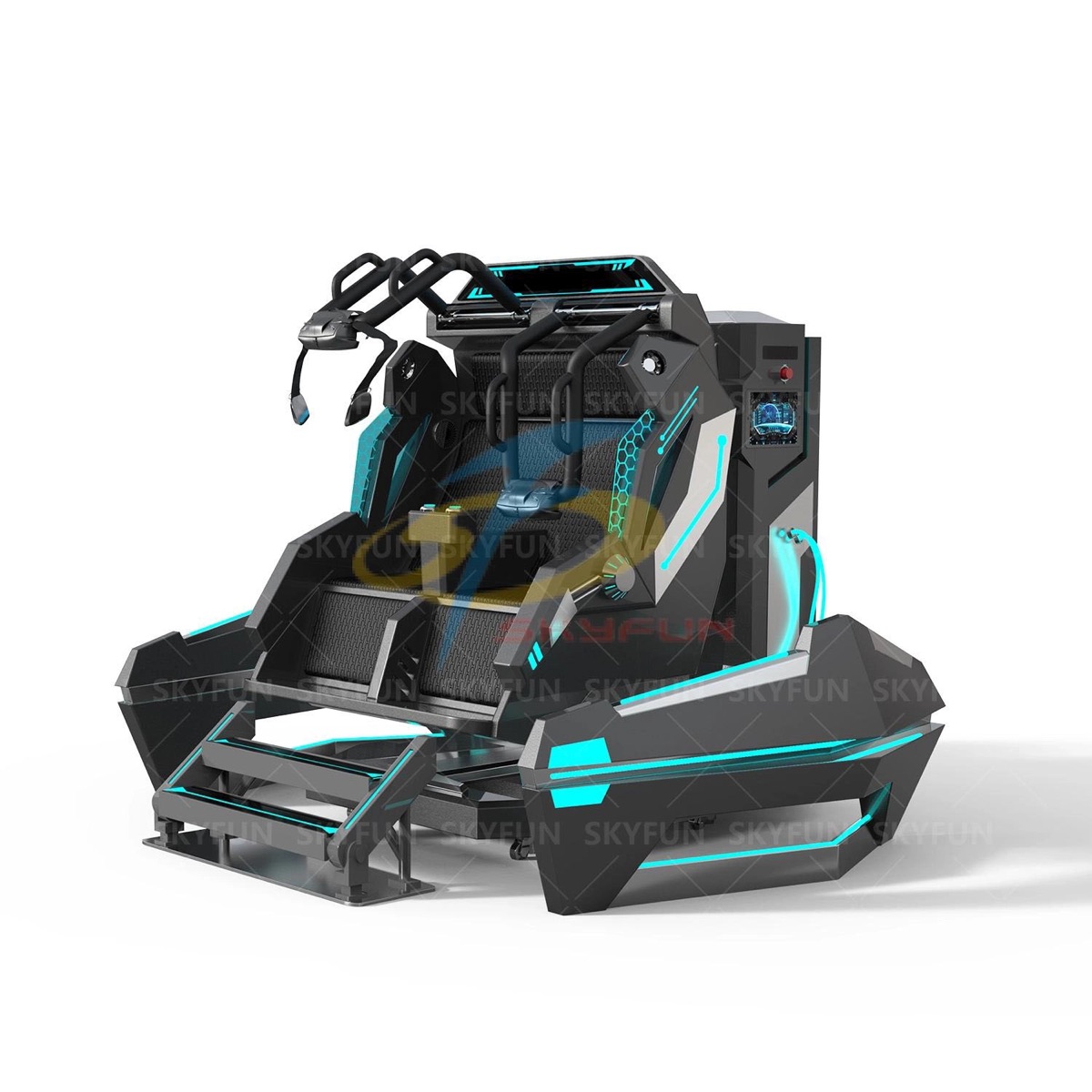
Motion VR normally supports a higher price because the machine provides physical movement and a stronger attraction effect. A two-seat 360 VR machine can be charged per person when seats are sold independently, or per session when friends want the full machine.
For multiplayer attractions, use a per-player session price with a minimum group size. Add a private-session or full-machine option for families, birthdays and team events. This makes the offer easier to understand while protecting revenue when a group uses the whole attraction.
Racing, Shooting and Sports Games
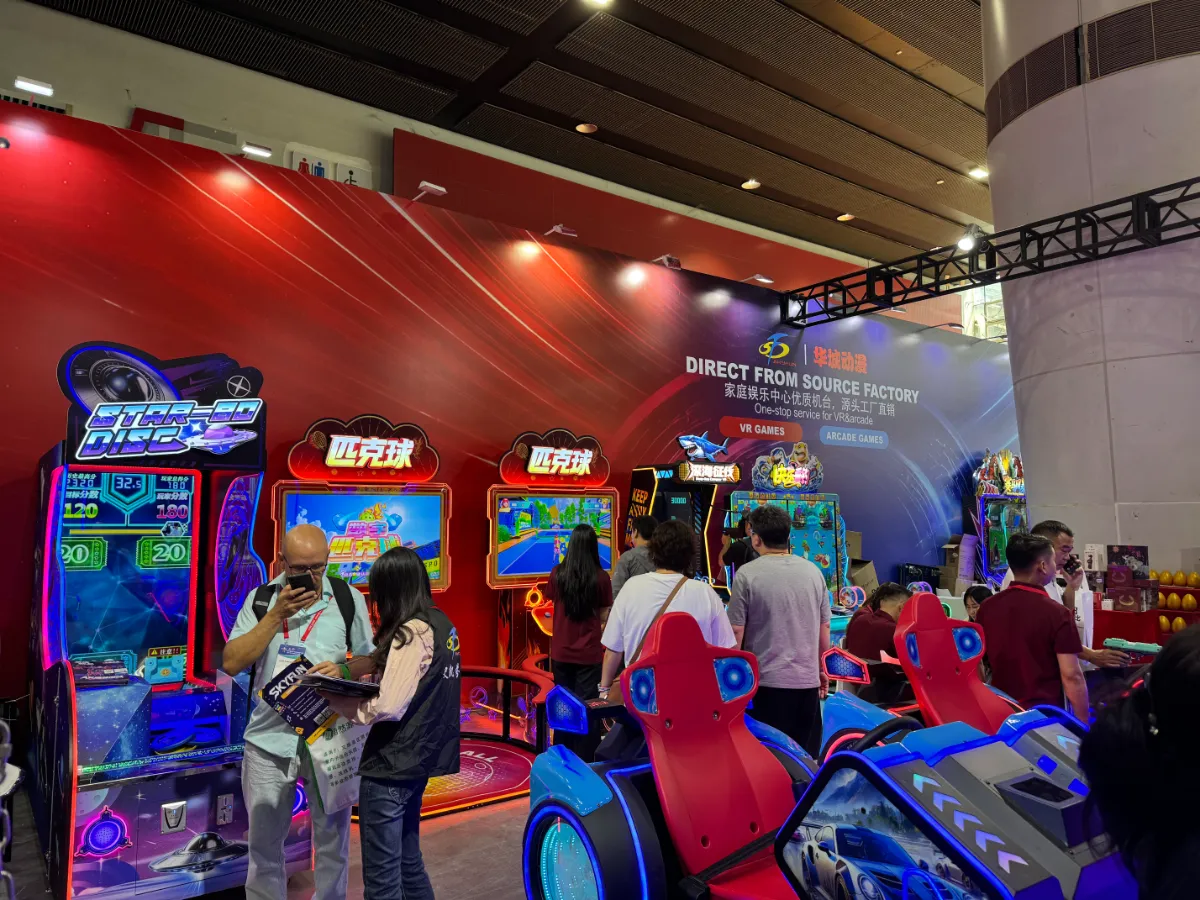
Racing machines and shooting games usually work well with a per-play credit price. Linked competition can justify a premium event fee or a multi-race package because customers are paying for both play time and social competition.
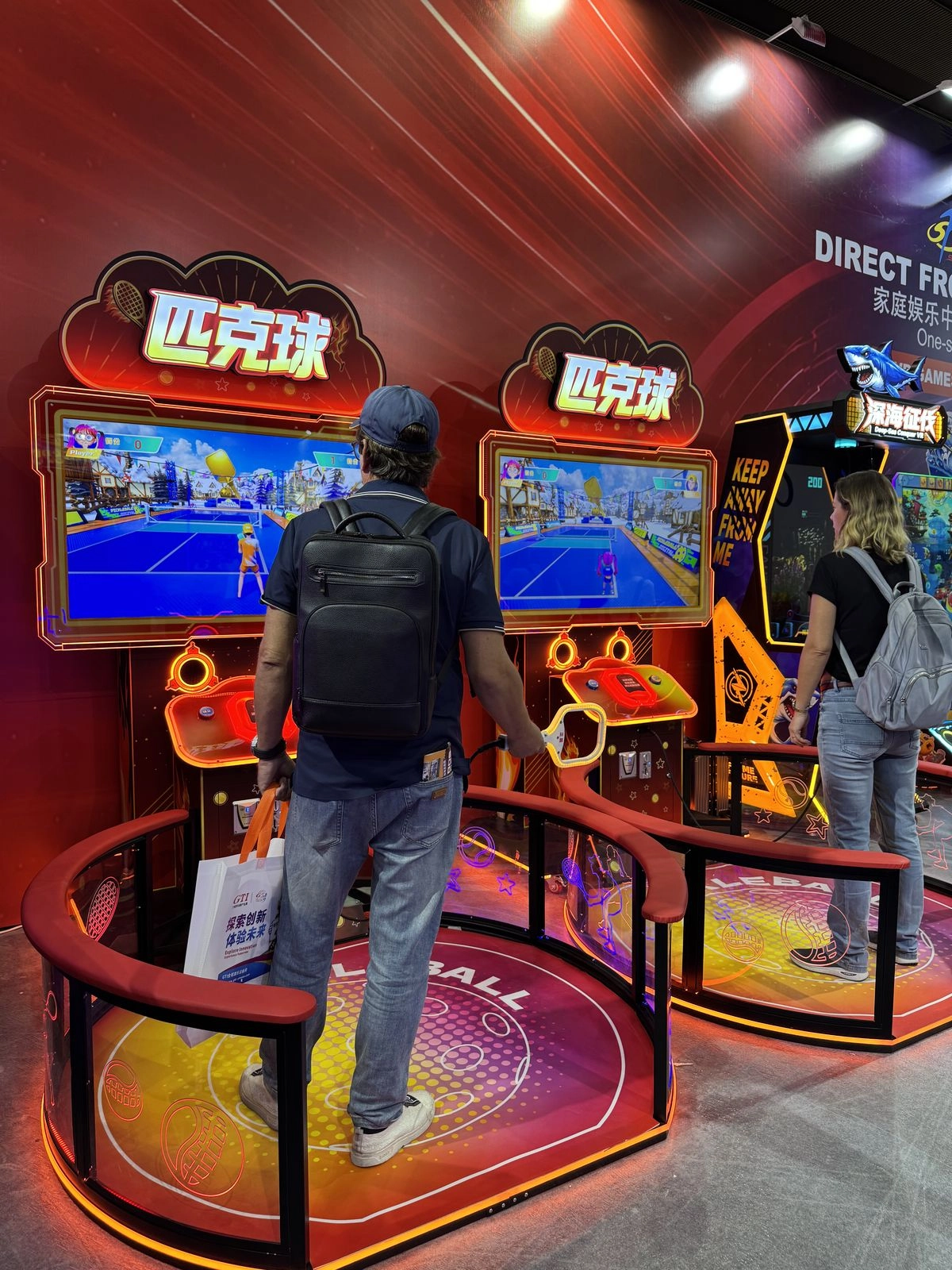
Basketball, pickleball and other sports game machines often have short rounds and fast turnover. Keep the single round easy to try, then use multi-play offers to encourage rematches.
Redemption and Gift Machines
For redemption games, pricing must be considered together with ticket payout and prize cost. A low play price with an overly generous payout may look popular but weaken gross margin. Review play revenue, ticket output, prize cost and refill frequency as one operating system. Gift machines should also account for the real product cost, winning probability and customer perception of fairness.
Per-Player Price or Full-Machine Price?
Charge per player when each person receives an individual experience and unused seats can be sold to other customers. Charge by the session when a family or group expects exclusive use, when the game requires cooperation, or when mixed groups would reduce comfort.
For two- and four-player equipment, showing both options is often effective: a standard price per player and a slightly better-value full-machine price. The full-machine price should still meet the venue's minimum revenue target for that time slot.
Build Packages Without Hiding the Real Price
Packages can increase advance spending and make a visit feel more valuable, but they should remain simple. Useful options include:
• Stored-value bonus: add a controlled bonus when customers load a higher amount
• Family package: combine entry-level VR, sports and redemption credits
• Group package: reserve multiplayer equipment for a fixed period
• Off-peak offer: add bonus credits during quiet weekday hours
• Repeat-play bundle: offer several rounds on competitive machines
Measure discounts against actual usage. A bonus that fills quiet capacity can help; the same offer during a peak queue may reduce revenue without creating more visits.
Arcade Game Pricing Reference Table
| Equipment Type | Typical Planning Cycle | Capacity | Recommended Charging Method |
|---|---|---|---|
| Self-service or compact VR | 3–6 minutes | 1 player | Per play or credits |
| Two-seat motion VR | 4–8 minutes | 1–2 players | Per player plus full-machine option |
| Multiplayer VR or interactive attraction | 10–30 minutes | 4 or more players | Per player, minimum group or private session |
| Racing or shooting simulator | 3–8 minutes | 1–4 players | Per play, linked race or multi-round bundle |
| Basketball, pickleball or sports game | 1–4 minutes | 1–2 players | Per round or multi-play credits |
| Redemption or gift machine | 1–3 minutes | 1 player | Per play with controlled payout or prize settings |
These ranges are planning references, not fixed rules. Actual game length, loading time and capacity depend on the selected machine, content and operating method.
Test Prices During Trial Operation
Start with a reasonable base price, then test small changes during a controlled trial period. Keep content and session length consistent so the result reflects the price rather than a different experience.
Review paid plays, repeat-play rate, queue length, hourly utilization, average card spend, refunds and customer comments. A long queue may support a higher price or better time-slot control. Low utilization may call for a lower trial price, clearer staff guidance, stronger placement or different content. Record every change with its date and reason.
Frequently Asked Questions
How often should arcade prices be reviewed?
Review data weekly during trial operation and monthly after performance stabilizes. Review again after major rent, labor, prize or equipment changes, but avoid changing prices so often that regular visitors become confused.
How do I estimate payback?
Divide the recoverable equipment investment by the expected daily contribution from the machine. Daily contribution is revenue minus direct operating costs such as prizes, consumables and payment fees. Use conservative traffic estimates and allow for maintenance and quieter periods.
Should every arcade machine use the same number of credits?
No. A uniform price is easy to explain, but it may underprice high-investment multiplayer or motion attractions and overprice short entry-level games. A small number of clear price bands is usually easier to manage than either one universal price or a different price for every machine.
Build a Pricing Plan for Your Venue
Good arcade pricing combines cost control, customer value and realistic capacity. Set a measurable target, choose the right charging method for each equipment type, then refine the plan with trial-operation data.
Send Skyfun your floor plan, equipment list, investment budget and local spending level. Our team can provide equipment selection and operating suggestions for a more practical arcade or FEC plan. Contact Skyfun to discuss your project.
Products
Do you offer support and training for using skyfun’s VR systems?
Yes, we provide comprehensive support and training for all our VR products, ensuring that your staff is fully equipped to operate and maintain the systems.
Solution
Does the VR device consume a lot of power?
Our VR devices are designed with energy efficiency in mind. The power consumption of the device is low and suitable for long-term use. The specific power consumption will vary depending on the type of device and frequency of use, and usually runs at standard voltage.
What is the warranty period for skyfun VR devices?
We provide a 1-year warranty for all skyfun VR devices. If any device failure occurs during the warranty period, you can get free repair or replacement services. Outside the warranty period, we also provide paid technical support and repair services.
Distributors
What support does skyfun provide after becoming a dealer?
We provide full support to dealers, including sales training, marketing materials, technical support and after-sales service. Our goal is to help you sell and operate our products successfully.
Aracde Game Machine
How are the machines packaged for international shipping?
To ensure zero damage during transit, all machines are packed using a strict 3-layer system: Stretch film (waterproof) + Bubble wrap (shock absorption) + Heavy-duty wooden crate/box.
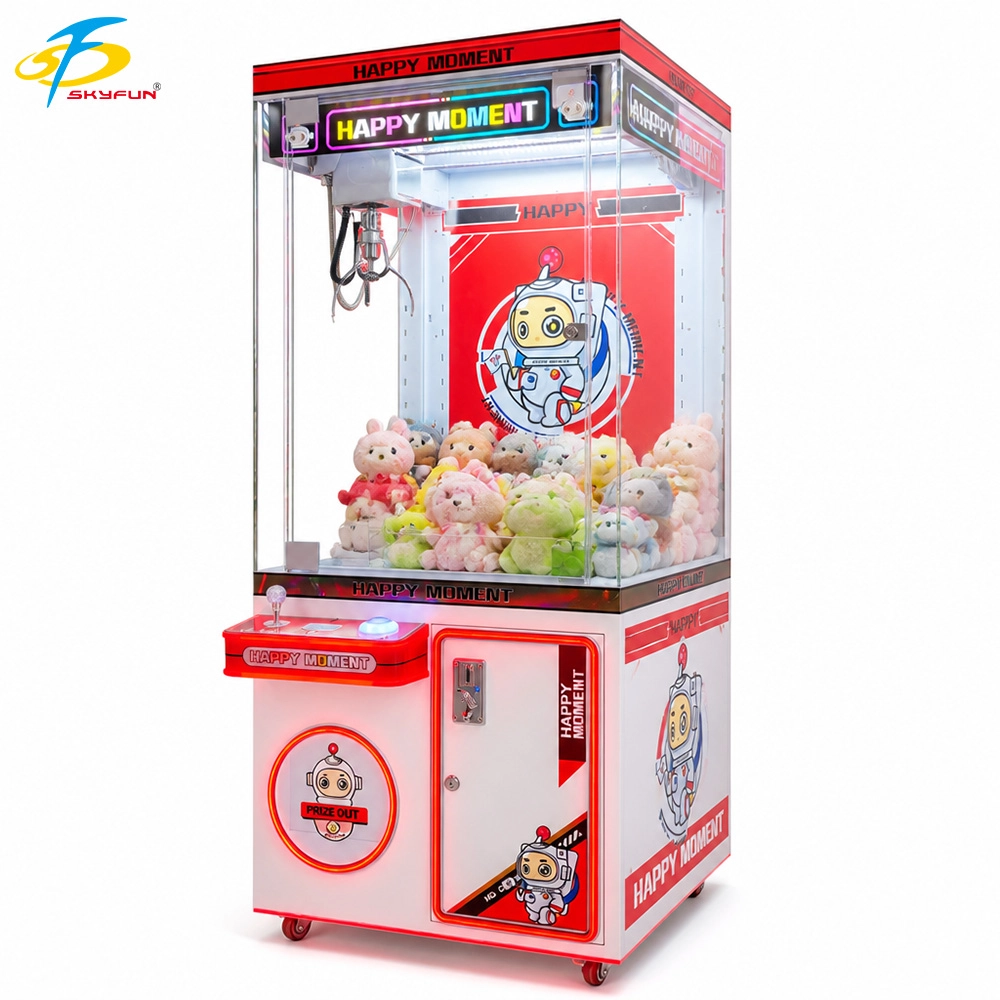
The Skyfun Happy Moment Commercial Red Claw Machine brings prize-catching entertainment to malls, cinema lobbies, arcades and family amusement venues. A cold-rolled steel cabinet and all-metal gantry combine with RGB lighting, stereo sound and crystal joystick controls. Smart mainboard settings and three-stage voltage-controlled claw grip help operators configure play for different prizes. Coin, bill, card and Nayax-compatible payment options, custom graphics and cabinet colors are available to suit your market.
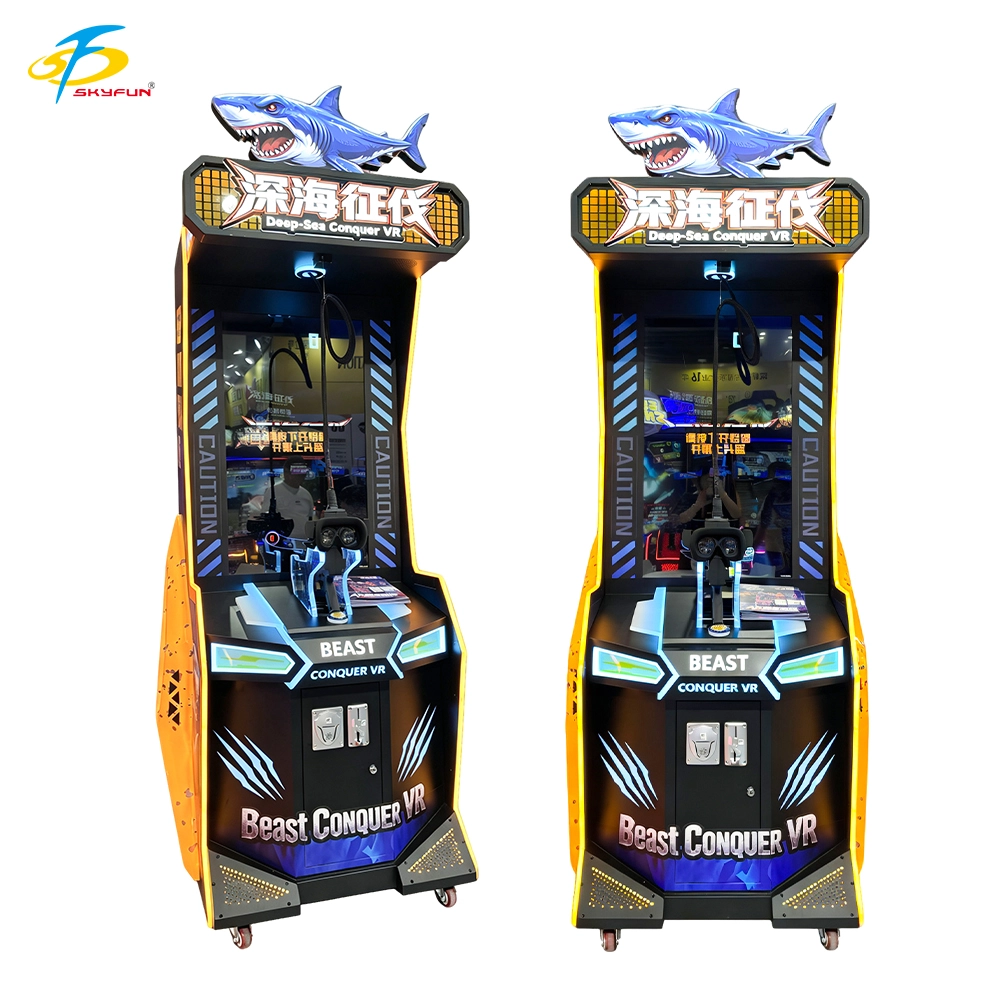
Skyfun Deep-Sea Conquer is a VR shooting arcade machine featuring four game scenarios, from defending supplies and battling a bat boss to exploring coral waters and the deep sea. Players aim, shoot and collect different in-game weapons while following score and ammunition indicators. A 43-inch display presents the action, and operator settings support free-play or coin-operated sessions, adjustable coins per game and revenue statistics.
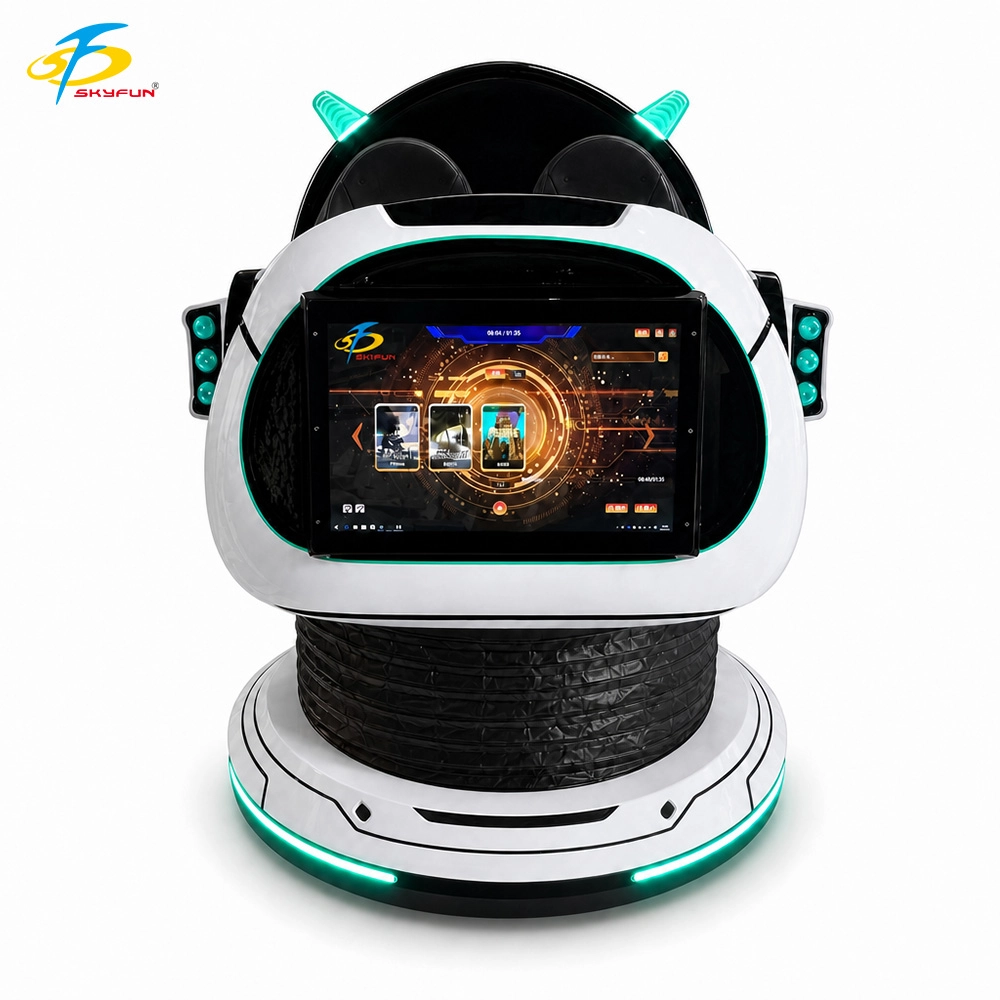
Skyfun 360 Rotating Panda is a two-seat VR motion simulator for commercial entertainment venues. Its crank-driven platform combines dynamic movement with 360-degree rotation, while a fiberglass panda-inspired body and illuminated accents create a distinctive attraction. A 42-inch external display shows the gameplay and supports operator control, and a 13-inch touchscreen lets players select their experience. Designed for VR centers, shopping malls and family entertainment centers.
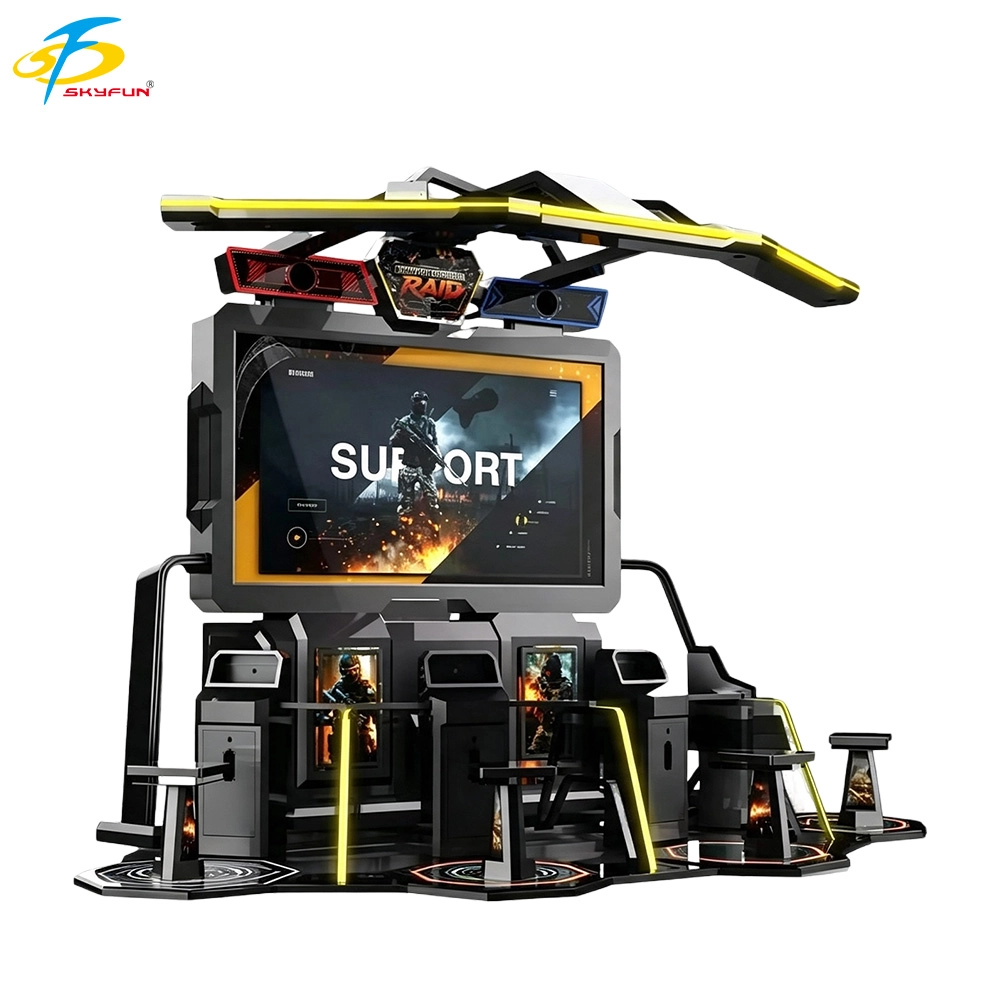
Skyfun Counter Terrorism Raid is a four-player VR shooting simulator for arcades, VR centers and family entertainment venues. Players experience story-driven missions in desert and harbor environments with a variety of in-game weapons, vehicles and interactive scenery. PICO VR headsets, recoil controllers and vibration seats complement the action, while the large external screen lets spectators follow the gameplay.
Want to know more updates?
If you have any technical questions or after-sales needs, please feel free to contact our service team.
We will wholeheartedly provide you with quick response and professional support to ensure the smooth operation of your VR & Arcade project.
 Scan QR Code
Whatsapp: +8618127818571
Scan QR Code
Guangzhou Skyfun Technology Co.,Ltd
skyfunvrgame
skyfun game