

How to Set Arcade Ticket Payout and Prize Cost for Redemption Games
Learn how to calculate arcade ticket payout, prize cost and redemption game margin. Includes three formulas, a worked example, payout logic by game type, inventory controls and practical FAQs for arcade operators.
- Start With the Data, Not a Guess
- Three Formulas Every Redemption Arcade Should Track
- A Simple Worked Example
- Calculate Prize Cost From Purchase Cost, Not Shelf Value
- Different Games Need Different Payout Logic
- Balance Ticket Value With Perceived Value
- Connect Payout to Inventory Management
- Adjust Settings During Trial Operation
- Frequently Asked Questions
- What is a good arcade ticket payout percentage?
- Should every redemption machine use the same ticket value?
- How often should prize ticket values be reviewed?
- Do unredeemed electronic tickets count as a cost?
- Can higher payouts always increase repeat play?
- Plan a Sustainable Redemption Mix
Redemption games can create repeat visits, longer play time and a stronger reason for customers to collect credits. However, the payout must be controlled carefully. If a machine gives too few tickets, players may feel that the reward is not worth pursuing. If it gives too many, prize costs can rise faster than game revenue.
A practical arcade ticket payout plan connects three things: the price of one play, the average number of tickets issued and the real cost of the prizes being redeemed. The goal is not simply to reduce payouts. It is to create a reward system that feels achievable to customers while protecting the venue's target margin.
Start With the Data, Not a Guess
Before changing any ticket setting, collect at least two to four weeks of operating data. New venues can begin with a conservative test setting and review it more frequently during trial operation.
• Revenue and paid plays for each machine
• Total tickets or electronic credits issued
• Number and cost of prizes redeemed
• Unredeemed ticket balance on customer cards
• Prize refill frequency and damaged stock
• Jackpot frequency, repeat-play rate and customer feedback
Physical paper tickets, electronic tickets and points stored on a game card can all use the same basic calculations. Electronic systems usually make reporting easier, but operators still need regular inventory checks because prize cost is created when a prize leaves the counter.
Three Formulas Every Redemption Arcade Should Track
| Metric | Formula | What It Shows |
|---|---|---|
| Prize cost rate | Cost of redeemed prizes ÷ redemption game revenue × 100% | The share of game revenue used to fund prizes |
| Cost per ticket | Total prize cost ÷ tickets required for those prizes | The average internal cost represented by one ticket |
| Target tickets per play | Target prize cost per play ÷ cost per ticket | A starting point for the average machine payout |
A Simple Worked Example
Assume one play costs $2.00. The operator chooses a 20% prize-cost target for this test, so the target prize cost per play is $0.40. If one ticket represents an average internal prize cost of $0.02, the starting average payout would be:
$0.40 ÷ $0.02 = 20 tickets per play
This is only an illustration, not a universal recommendation. A venue must choose its own target according to game price, rent, labor, payment fees, local spending level and desired redemption game profit margin. The important point is that the payout should be calculated from real cost rather than copied from another arcade.
Calculate Prize Cost From Purchase Cost, Not Shelf Value
Customers judge prizes by their visible value, but the operator must calculate cost using the actual purchase price plus freight, import charges, packaging loss and damaged stock. A prize that looks valuable but is sourced efficiently can create stronger perceived value without increasing the budget.
Create several prize levels so customers can redeem something after a short visit and still see a reason to save for a larger reward:
• Entry prizes: low-ticket items that give children an immediate reward
• Mid-level prizes: items that normally require several games or a return visit
• Premium prizes: visible rewards that support long-term ticket saving
• Limited or seasonal prizes: items that refresh the display and create urgency
Do not set the redemption value once and forget it. Recalculate when purchase cost, freight or exchange rates change. If a prize cost increases, adjust its ticket requirement or replace it with an item that delivers similar customer appeal.
Different Games Need Different Payout Logic
A venue should not apply one identical ticket output to every machine. Skill level, round length, player capacity and jackpot structure all affect the experience. Skyfun's redemption game machines can be planned as part of a wider mix rather than treated as isolated equipment.
| Game Type | Payout Approach | Main Control Point |
|---|---|---|
| Short skill game | Small base award with higher results for better performance | Average payout over many plays, not one player's score |
| Luck-based game | Stable small awards plus a controlled bonus or jackpot | Jackpot frequency and long-term average payout |
| Children's game | Reliable minimum reward with simple rules | Fairness, accessibility and repeat-play response |
| Two-player or social game | Reward participation and add a winner bonus where suitable | Cost per group session and rematch rate |
| High-value jackpot game | Lower routine payout with a visible progressive goal | Jackpot liability, frequency and customer understanding |
Skill-based games should reward improvement clearly. Luck-based games need a transparent experience even though outcomes vary. The machine's displayed rules, jackpot status and ticket result should be easy to understand so customers know what they are playing for.
Balance Ticket Value With Perceived Value
Two venues can have the same prize cost rate but create very different customer reactions. One may display attractive prizes clearly and make progress easy to understand. The other may offer weak choices, empty shelves or confusing ticket requirements.
Use clear price labels, group prizes by ticket level and keep the most aspirational rewards visible from the game area. Staff should be able to explain whether tickets expire, whether balances can be combined and how customers can check their points. These operational details affect perceived fairness as much as the numerical payout.
Ticket promotions should also be measured. Double-ticket hours may help fill quiet periods, but the extra liability must be included in the calculation. During busy periods, a bonus may raise prize cost without creating additional visits.
Connect Payout to Inventory Management
Accurate arcade prize cost depends on inventory discipline. Record the quantity received, unit cost, ticket value, quantity redeemed and remaining stock for each item. Carry out routine counts and compare physical stock with the system report.
Watch for three common problems: prizes being given out without a transaction, ticket values being entered incorrectly and old stock remaining unattractive on the shelf. A slow-moving prize is not necessarily cheap if it ties up cash and display space. Rotate products, test seasonal items and remove damaged packaging quickly.
For direct-win equipment and gift game machines, calculate the average product cost per paid play instead of cost per ticket. The operating principle is the same: revenue, winning probability and real prize cost must be reviewed together.
Adjust Settings During Trial Operation
Test one change at a time. If price, ticket output, jackpot frequency and prize selection are all changed together, it becomes difficult to know what caused the result.
During the first weeks, review each machine's paid plays, average tickets per play, prize cost contribution, repeat plays and downtime. A machine with low use may need better placement or clearer instructions rather than a higher payout. A popular machine with excessive prize cost may need a smaller base award, a revised jackpot setting or a different game price.
Keep a dated record of every adjustment. Compare weekday and weekend performance separately, and review the system after new prizes or promotional packages are introduced. Payout management is an ongoing operating process, not a one-time setup task.
Frequently Asked Questions
What is a good arcade ticket payout percentage?
There is no single percentage that fits every venue. The right target depends on game price, local costs, prize sourcing, customer expectations and the required margin. Choose a test target, calculate it from real costs and refine it using operating data.
Should every redemption machine use the same ticket value?
The ticket itself can represent one consistent internal value, but machines do not need to issue the same number of tickets. Output should reflect game length, skill, jackpot design and price per play.
How often should prize ticket values be reviewed?
Review fast-moving items at least monthly and whenever purchasing or freight costs change. Trial venues should review results weekly until the payout and prize mix become stable.
Do unredeemed electronic tickets count as a cost?
They are not yet a physical prize cost, but they are a future redemption liability. Track outstanding balances so a later wave of redemptions does not surprise the operation.
Can higher payouts always increase repeat play?
No. A payout can help, but machine placement, game quality, prize appeal, staff guidance and perceived fairness also influence repeat play. Test the complete customer experience rather than relying on tickets alone.
Plan a Sustainable Redemption Mix
A successful redemption area combines enjoyable games, understandable rewards and controlled prize cost. Calculate a starting payout, monitor actual redemption and improve prize presentation before making large changes.
Send Skyfun your floor plan, equipment list, game prices and local spending level. Our team can help review the equipment mix, ticket logic and operating plan for your arcade or family entertainment center. Contact Skyfun to discuss your project.
Solution
Does skyfun provide transportation services for VR devices?
skyfun's VR equipment is made of high-quality materials and undergoes strict quality control. The service life of the equipment is usually more than 5 years, depending on the frequency of use and maintenance of the equipment. Regular care and maintenance can extend the service life of the equipment.
Application
What hardware equipment is required for VR games?
Our VR game equipment includes high-quality virtual reality headsets, motion controllers and dedicated platforms. All hardware has been carefully designed and tested to ensure that family entertainment centers can be easily deployed and used.
Does the VR game support multi-person interaction on the same screen?
Yes, skyfun's VR gaming devices support multiplayer on-screen interaction. Family members can participate in multiplayer competitive games, cooperative adventure games, etc., to enhance the interaction and entertainment experience among family members.
Aracde Game Machine
How are the machines packaged for international shipping?
To ensure zero damage during transit, all machines are packed using a strict 3-layer system: Stretch film (waterproof) + Bubble wrap (shock absorption) + Heavy-duty wooden crate/box.
How to get technical support if the device fails?
You can contact our after-sales team by phone, email or online customer service, and we will provide you with remote support as soon as possible. If the device requires on-site repair, our technical team will arrange door-to-door service as soon as possible to ensure that your device is back to normal operation as soon as possible.
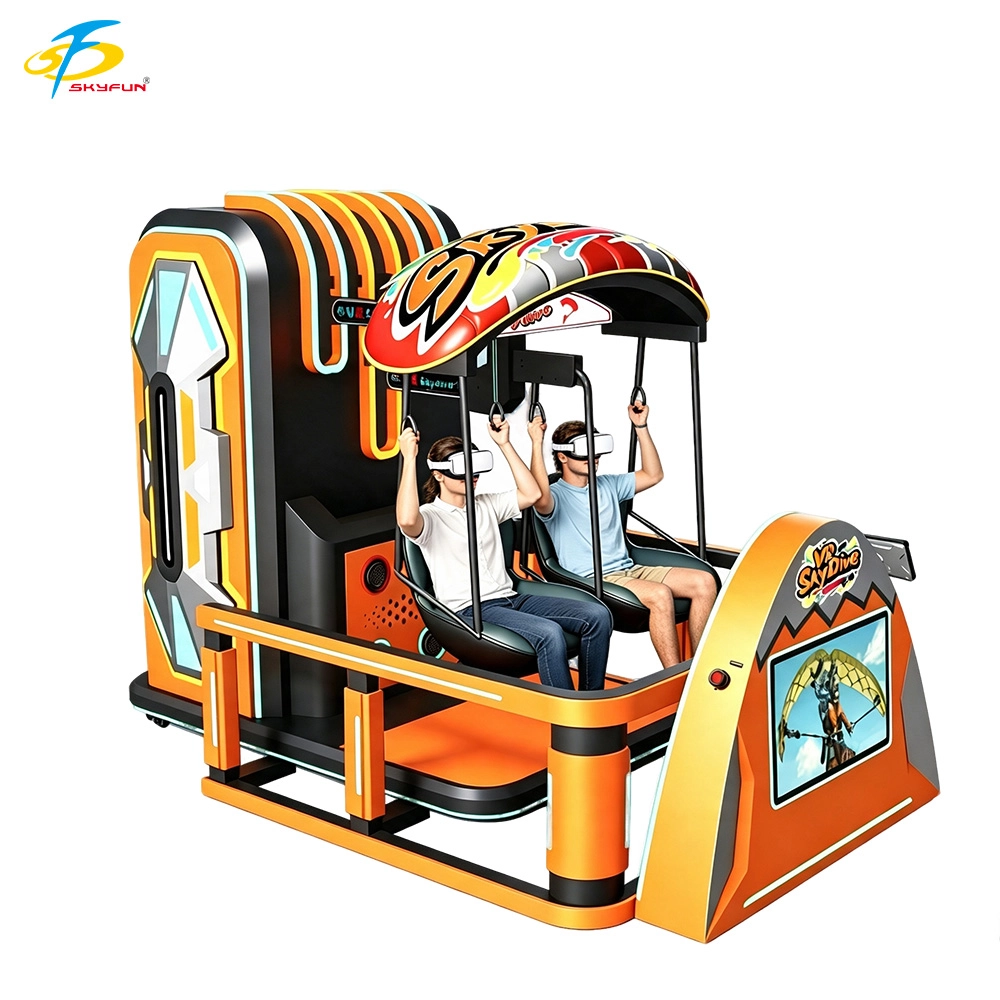
Skyfun VR Skydiving is a two-player 4D VR simulator arcade machine that recreates virtual flight through suspended seats, custom PICO NEO3 headsets, surround sound and environmental effects.
Players can experience 23 game titles with continuously updated content. The machine provides wind, rain, mist, scent, weightlessness and collision effects to enhance the virtual skydiving experience.
Confirmed specifications include 3KW power, AC 220V–230V voltage and D 312 × W 198 × H 210 cm dimensions. It is suitable for shopping malls, VR theme parks, scenic spots, arcade halls, tourist attractions and family entertainment centers.
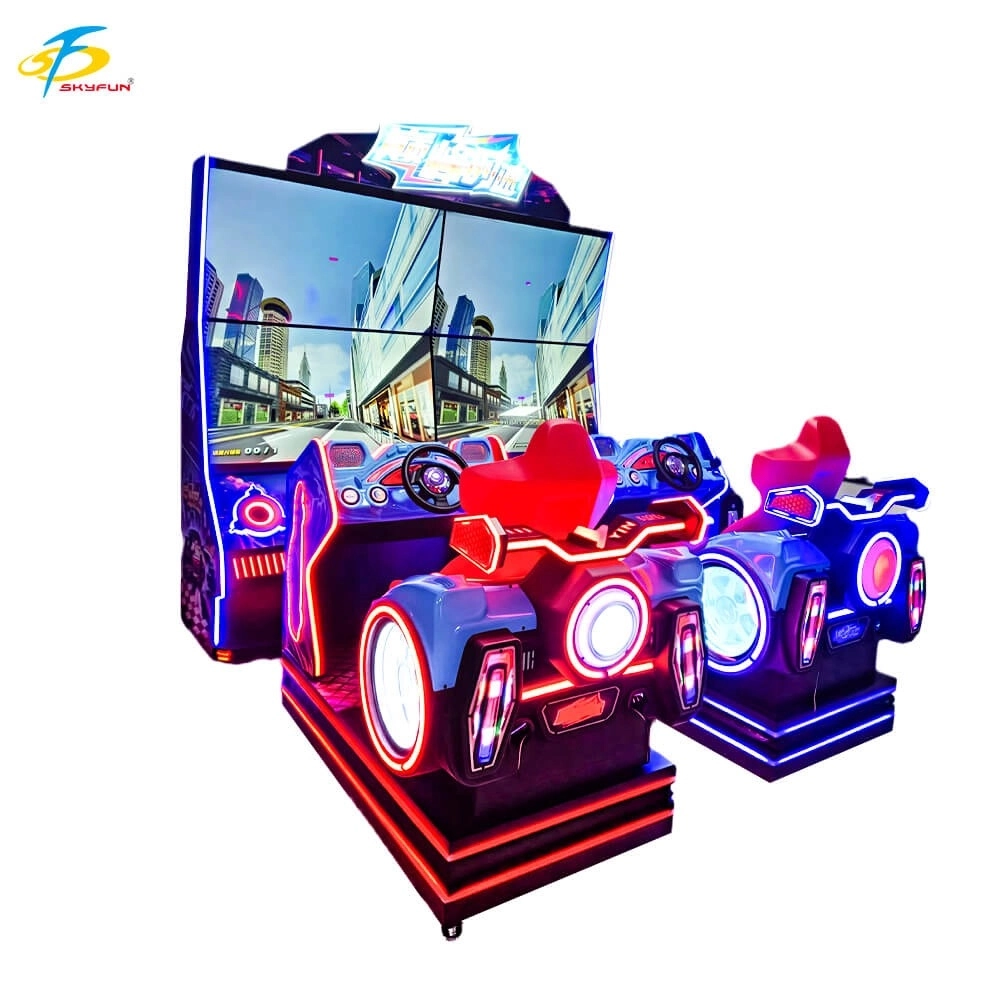
The SKYFUN Four-Screen Dynamic Racing Car combines four 55-inch HD LCD displays with two independent motion cockpits for head-to-head arcade racing. Steering-wheel controls and red bucket seats create a dedicated driving position for each player, while the illuminated cabinet makes the attraction visible across a busy venue. Three confirmed modes cover challenge, battle and tournament play. With a 1000 W configuration and a 284 × 260 × 280 cm footprint, this commercial racing simulator offers a distinctive centerpiece for game centers, shopping malls and indoor entertainment complexes.
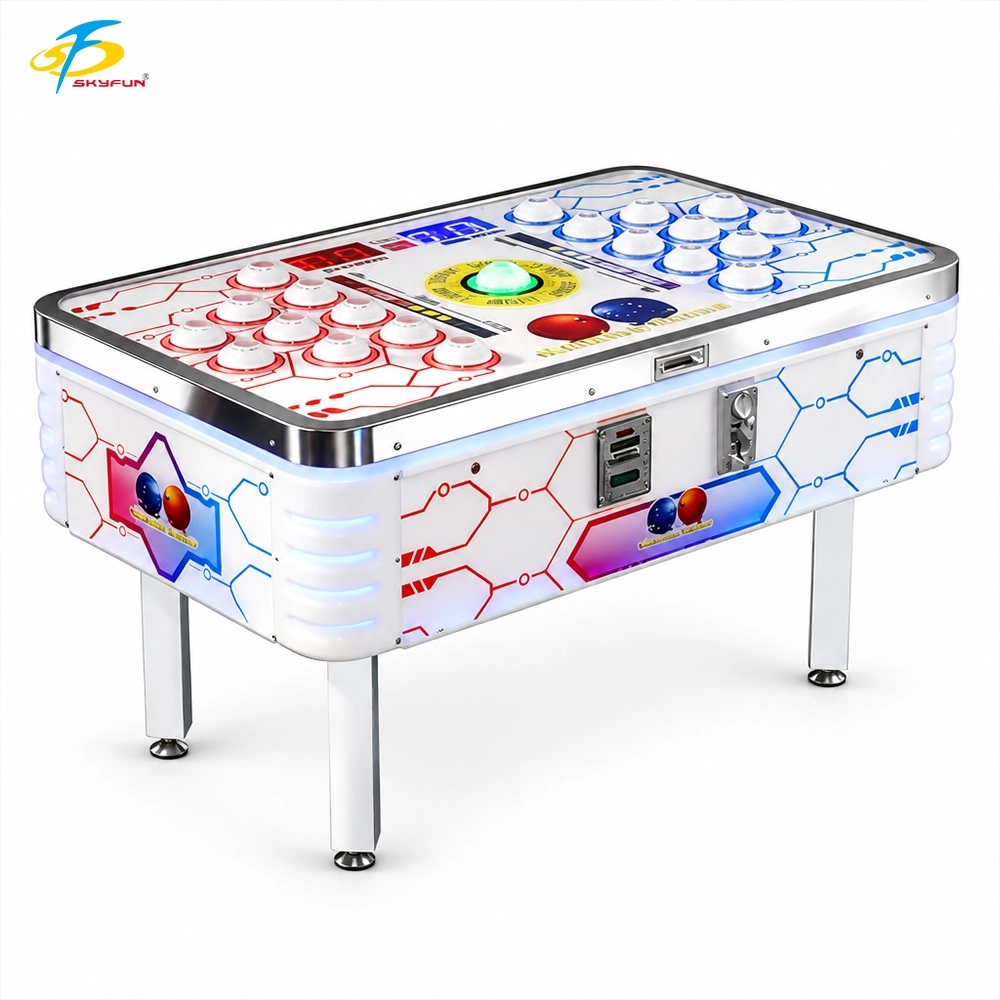
Boost venue net profit with this low-investment, high-return Dou Dou Le commercial ticket machine. It features a compact size and needs no site remodelling to deliver stable long-term earnings.
👍 Extremely low power consumption: rated merely 170W, greatly reducing daily power bills for round-the-clock operation.
👍 Dual revenue channels: two coin acceptors support simultaneous consumption, lifting daily profit per unit.
👍 Robust industrial construction: fitted with a 304 stainless steel countertop and buttons rated for 10 million taps to cut parts replacement costs.
👍 Modular, user-friendly maintenance: regular staff can complete servicing without professional technicians, saving labour expenses.
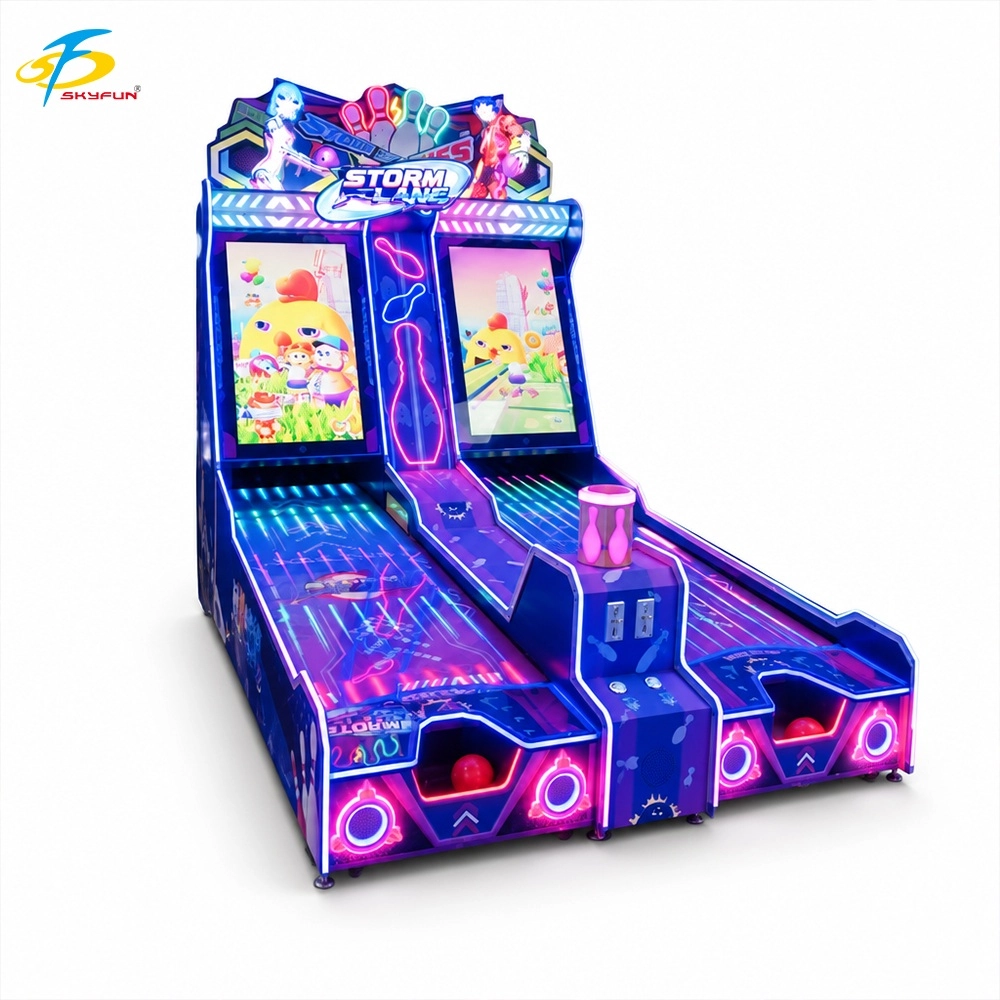
Skyfun Storm Lane is a commercial 2-player bowling ticket redemption arcade machine designed to deliver maximum venue revenue. Featuring dual 50-inch HD interactive displays, 6 unique themed game scenarios, and a dual-station cabinet structure, it doubles player throughput within a compact floor space. Built with a low 400W power consumption system, adjustable RGB ambient lights, and dual QR/coin payment support, it serves as a high-turnover profit booster for game centers, shopping malls, and family entertainment complexes.
Want to know more updates?
If you have any technical questions or after-sales needs, please feel free to contact our service team.
We will wholeheartedly provide you with quick response and professional support to ensure the smooth operation of your VR & Arcade project.
 Scan QR Code
Whatsapp: +8618127818571
Scan QR Code
Guangzhou Skyfun Technology Co.,Ltd
skyfunvrgame
skyfun game