
VR Theme Parks vs. Traditional Parks: What's Better?
As immersive technology takes over the entertainment world, VR theme parks are drawing attention as futuristic alternatives to traditional amusement venues. This article explores the differences, benefits, and business value of both models to help readers understand which experience delivers more.
- Overview of VR Theme Park
- What Makes It Special?
- How VR Theme Park Delivers a Fully Immersive Experience
- Multi-Layered Sensory Design
- VR Theme Parks vs. Traditional Amusement Parks: Key Differences
- 1. Space and Flexibility
- 2. Experience Variety
- 3. Cost and Maintenance
- 4. Replay Value
- How VR Theme Parks Are Shaping the Future of Entertainment
- Innovations Driving the Trend
- Are VR Theme Parks a Good Investment for Operators?
- Why Investors and Operators Are Paying Attention
- Conclusion
- Contact Us
As technology reshapes entertainment, one of the most exciting developments is the VR theme park. Compared to traditional amusement parks filled with roller coasters and Ferris wheels, VR parks offer a radically different experience—blending immersive technology with the thrill of digital interactivity. But how do these futuristic parks compare to the long-standing giants of fun?
Let’s dive into the world of vr in theme parks, explore the gameplay mechanics, customer experiences, and investment value to determine which truly offers the future of amusement.
Overview of VR Theme Park
Before comparing, it’s essential to understand what a VR theme park actually is.
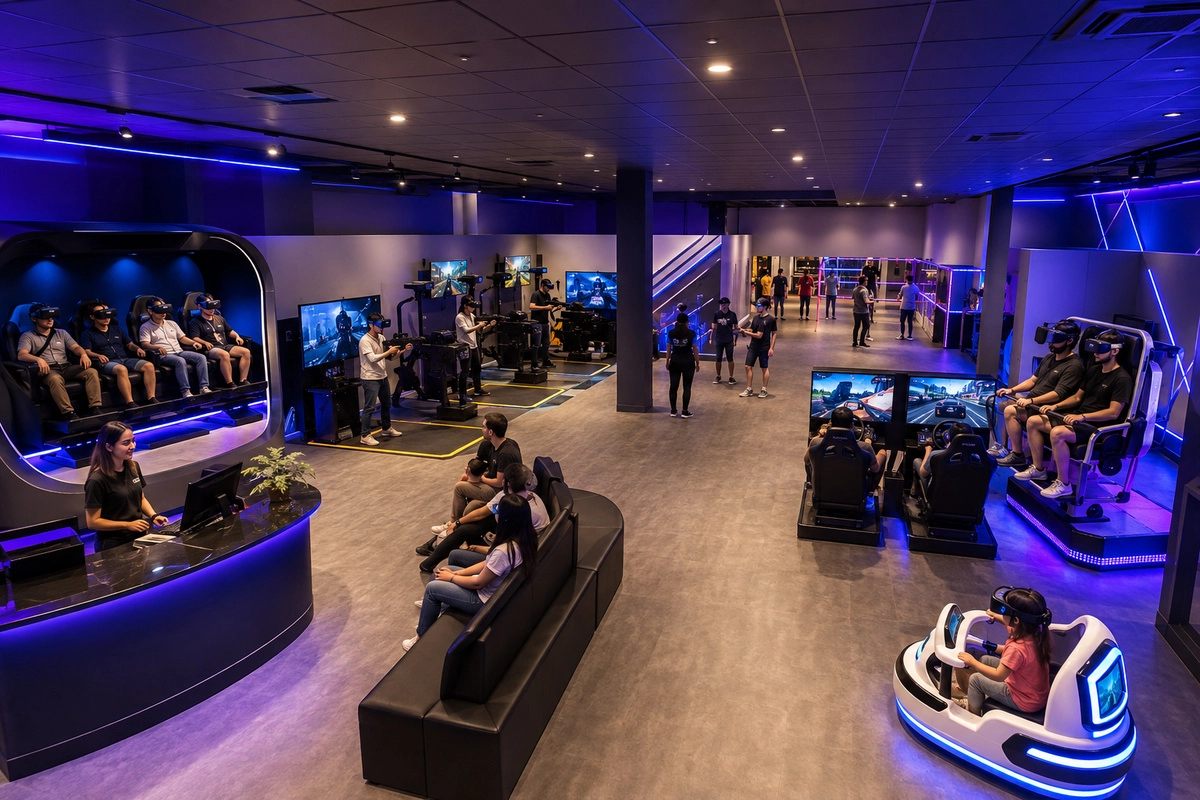
Unlike traditional parks that rely on mechanical rides and physical space, a VR theme park is built around virtual reality (VR) and augmented reality (AR) technologies. Visitors wear headsets and interact with simulated environments that range from sci-fi worlds to realistic racing simulators, zombie apocalypses, or deep-sea adventures.

What Makes It Special?
These parks feature a wide variety of vr theme park rides such as:
- 9D VR Cinema: Multi-sensory films enhanced with motion seats and environmental effects.
- VR Racing & Shooting Simulators: For competitive and immersive gameplay.
- 360 VR Rides & Flying Theaters: Giving guests the sensation of floating or free-falling.
- AR VR theme park installations: Blending real-world interaction with virtual graphics for an enhanced mixed-reality experience.
Some well-known examples include Spaces VR Theme Park, where users navigate rich narrative worlds, or large-scale vr theme park in China attractions equipped with cutting-edge simulators.
How VR Theme Park Delivers a Fully Immersive Experience
Now that we know what it is, let’s look at why VR theme parks are so immersive.
Traditional parks depend on physical movement and thrills. However, VR parks deliver psychological and sensory immersion. With a headset and motion platform, visitors aren’t just watching or riding—they’re inside the experience.
Multi-Layered Sensory Design
- Visual Immersion: 360° visuals with high refresh rates create realistic virtual environments.
- Audio Feedback: Spatial sound amplifies realism, whether it's the roar of a dragon or the wind in a virtual canyon.
- Motion Simulation: Platforms simulate acceleration, impact, or elevation to mimic real physics.
- Environmental Effects: Wind, scent, fog, and vibration create a rich sensory landscape.
Combined, these layers allow vr theme park rides gameplay to surpass what mechanical rides can offer. You’re not on a roller coaster—you’re piloting a spaceship or flying over alien worlds.

VR Theme Parks vs. Traditional Amusement Parks: Key Differences
Both types of parks aim to entertain and engage, but their approach to attraction design, audience interaction, and operational models differ dramatically. As technology evolves, virtual reality has introduced a compelling alternative to conventional thrill rides—one that blends immersive experiences with adaptability and lower operational complexity.
1. Space and Flexibility
-
Traditional Amusement Parks are often sprawling complexes that require acres of land to accommodate roller coasters, water rides, themed areas, and large crowd capacity. These installations demand significant investment not only in physical infrastructure but also in zoning, safety, and seasonal upkeep. Building a traditional park can take years of planning and millions in construction costs.
In contrast, VR Theme Parks are far more compact and modular by design. They can be installed in much smaller venues such as shopping malls, airports, entertainment complexes, or even stand-alone retail units. This flexibility allows operators to open in high-traffic urban areas without the need for massive real estate. Modular setups also mean VR parks can be relocated, expanded, or reconfigured with minimal disruption and cost.
2. Experience Variety
-
The experience offerings at traditional amusement parks are constrained by physics, ride mechanics, and physical space. A ride’s theme or thrill level cannot be changed once it’s built, meaning parks must invest heavily to add novelty and maintain visitor interest.
VR theme parks, on the other hand, are powered by software—enabling an unlimited range of experience types. From deep-sea adventures to space battles or haunted house thrillers, content can be swapped, updated, or customized with ease. New content can be downloaded instantly, eliminating the need for physical construction or ride modifications. This dynamic storytelling capability allows VR parks to keep experiences fresh and aligned with seasonal events, movie releases, or regional preferences.
3. Cost and Maintenance
-
Operating and maintaining traditional amusement parks is capital-intensive. Mechanical rides require constant inspection, replacement of parts, and teams of engineers and safety personnel. Staff training, insurance, and weather-related issues also increase the cost of daily operations. Downtime for repairs can affect revenue significantly.
In comparison, VR rides involve fewer moving parts and are typically built around VR headsets, motion platforms, and haptic controls. These systems are easier and cheaper to maintain, require fewer staff members, and have minimal downtime. A VR theme park game can be rebooted or repaired digitally, reducing operational disruptions. The lower staffing requirements also make VR parks more scalable and suitable for entrepreneurs entering the entertainment space with limited resources.
4. Replay Value
While traditional amusement park rides can offer thrills, their novelty often wears off after a few rides. Repeat visits may require substantial time gaps or new attractions to retain interest. A roller coaster will always follow the same track, no matter how thrilling the first experience was.
VR theme parks offer high replay value because their content can evolve. Whether it's through new game modes, player-versus-player challenges, or interactive storytelling, visitors are given reasons to come back repeatedly. Personalized scoring systems, AR integrations, and seasonal themes can also be layered on top of existing games, providing a fresh experience each time. This replayability becomes a major driver of customer retention, particularly among younger demographics who crave novelty and engagement.
How VR Theme Parks Are Shaping the Future of Entertainment
Entertainment is shifting toward immersive, personalized, and tech-driven experiences. Just as streaming reshaped cinema, vr theme parks are transforming location-based entertainment.
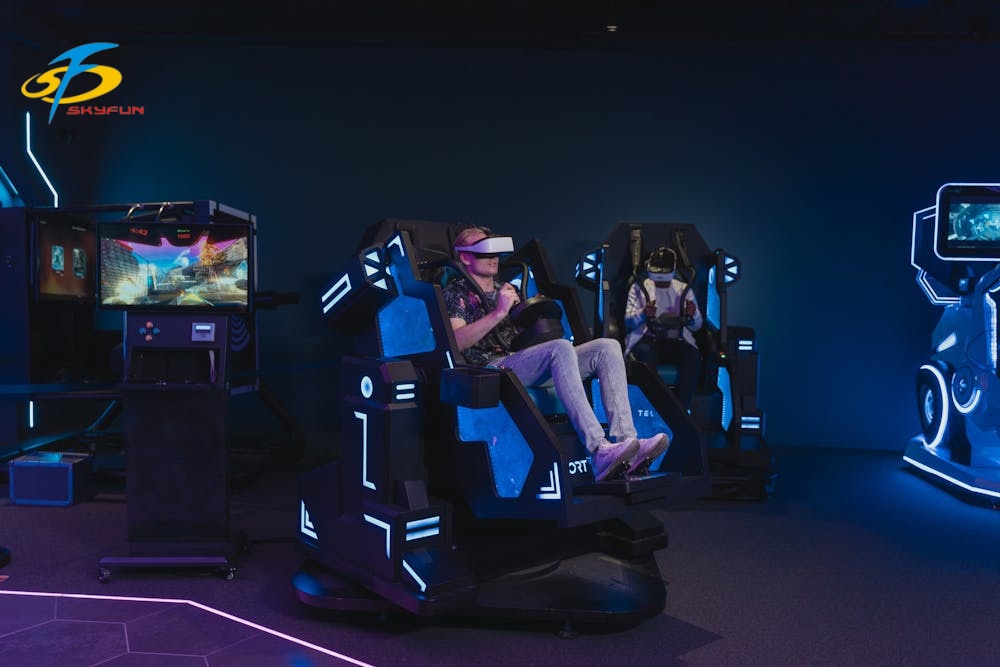
Innovations Driving the Trend
- AI-powered storytelling: Interactions that respond to user behavior.
- Cloud-based updates: New worlds, characters, and challenges can be pushed remotely.
- Social integration: Multiplayer features and shared VR spaces turn games into group experiences.
Even traditional amusement giants are now incorporating vr in theme parks to stay competitive. The rise of hybrid venues marks a transition toward more digitally-enhanced attractions.
Are VR Theme Parks a Good Investment for Operators?
From a business perspective, the growth potential of vr theme parks is immense.
Why Investors and Operators Are Paying Attention
- Lower Initial Investment: Compared to building a roller coaster, setting up a VR simulator venue is relatively affordable.
- Scalable Models: VR venues can start small and scale up based on demand.
- Fast ROI: With the rising popularity of vr theme park rides, operators can recover costs faster, especially in high-traffic locations.
- High Customization: Brands can tailor content and layout based on theme, target age group, or location.
For example, vr theme park rides gameplay data can be tracked and analyzed, allowing operators to optimize performance and improve retention.
Discover more immersive advantages of VR theme parks here.

Conclusion
Both traditional amusement parks and VR theme parks have their place in the entertainment ecosystem. However, as consumers increasingly seek out immersive and tech-savvy experiences, VR parks are quickly becoming the go-to for innovation and engagement.
With lower overhead, scalable models, and constantly evolving content, it’s clear that vr theme parks are not just a trend—they’re a transformative force in the amusement industry.
Contact Us
Interested in launching your own VR theme park or upgrading your current venue? skyfun is a trusted industry leader based in Guangzhou, offering over 10 years of expertise, OEM/ODM services, and global support. Whether you're looking for vr theme park rides, planning consultation, or one-stop arcade solutions—we’re here to help you shape the future of entertainment.
Products
How does skyfun’s VR technology work?
Our VR systems use advanced headsets, motion tracking, and interactive controls to create an immersive, 360-degree experience. Players can engage with digital environments in real time, simulating real-world and fantastical scenarios.
How durable are your VR machines?
Our VR machines are designed for durability and high traffic use, ensuring long-lasting performance. We also provide maintenance and support services to keep your equipment running smoothly.
What types of arcade games do you offer?
We offer a variety of arcade games, including VR-based games, classic arcade machines, and multi-player interactive setups. Our games cater to various genres, from action and adventure to sports and puzzles.
Aracde Game Machine
How can I design my arcade venue to minimize maintenance and keep costs low?
Solution
Does skyfun provide transportation services for VR devices?
skyfun's VR equipment is made of high-quality materials and undergoes strict quality control. The service life of the equipment is usually more than 5 years, depending on the frequency of use and maintenance of the equipment. Regular care and maintenance can extend the service life of the equipment.
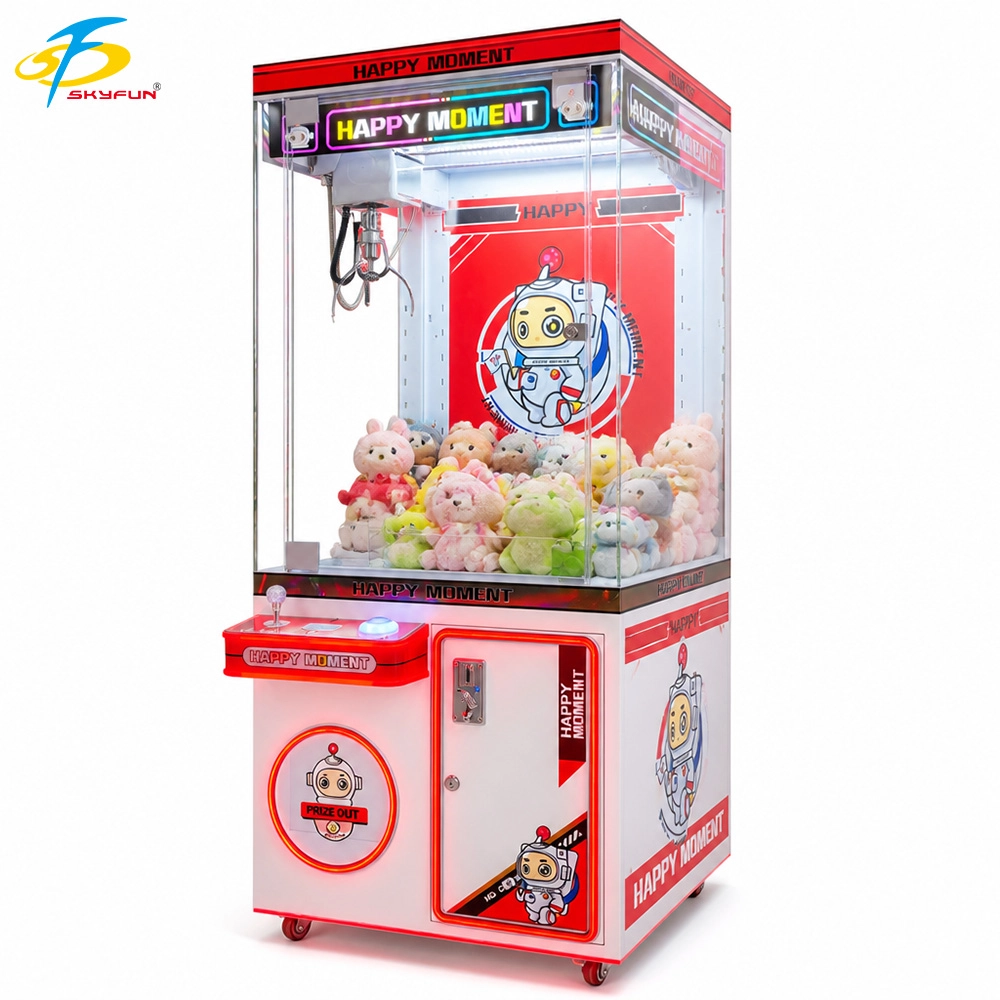
The Skyfun Happy Moment Commercial Red Claw Machine brings prize-catching entertainment to malls, cinema lobbies, arcades and family amusement venues. A cold-rolled steel cabinet and all-metal gantry combine with RGB lighting, stereo sound and crystal joystick controls. Smart mainboard settings and three-stage voltage-controlled claw grip help operators configure play for different prizes. Coin, bill, card and Nayax-compatible payment options, custom graphics and cabinet colors are available to suit your market.
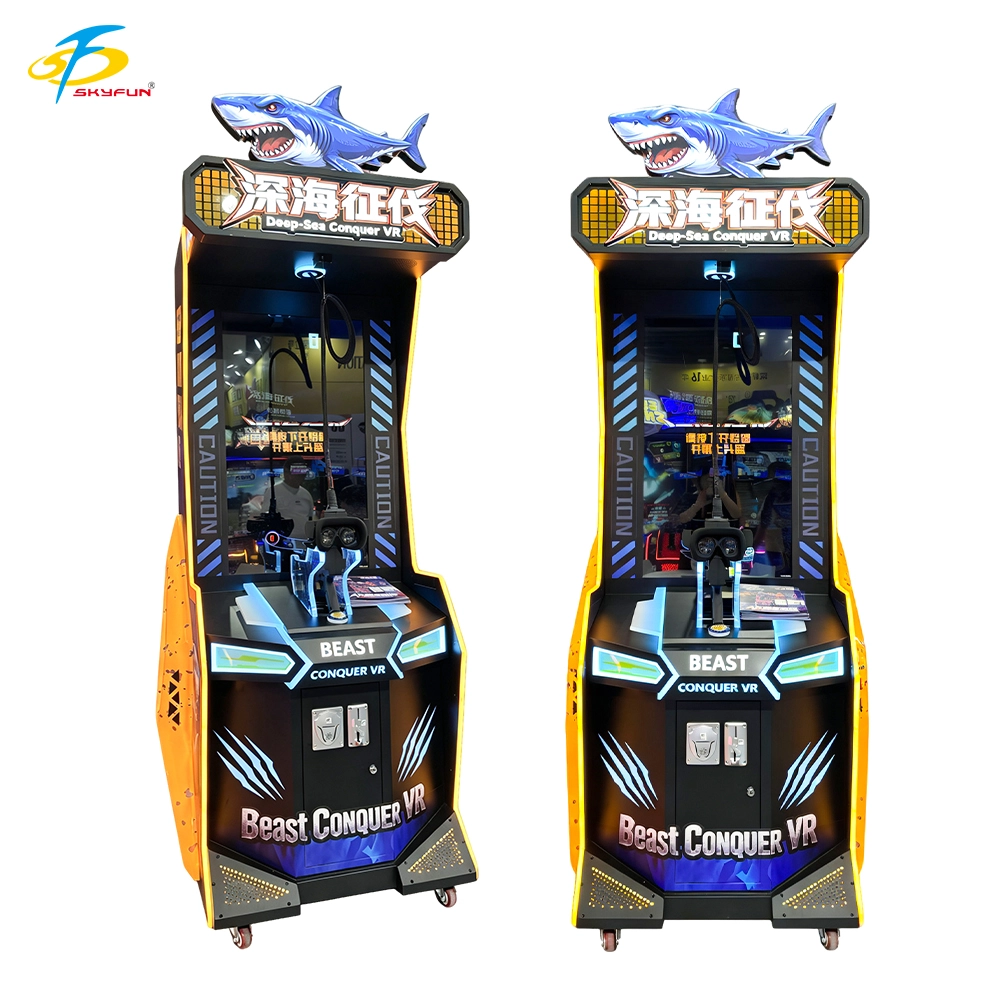
Skyfun Deep-Sea Conquer is a VR shooting arcade machine featuring four game scenarios, from defending supplies and battling a bat boss to exploring coral waters and the deep sea. Players aim, shoot and collect different in-game weapons while following score and ammunition indicators. A 43-inch display presents the action, and operator settings support free-play or coin-operated sessions, adjustable coins per game and revenue statistics.
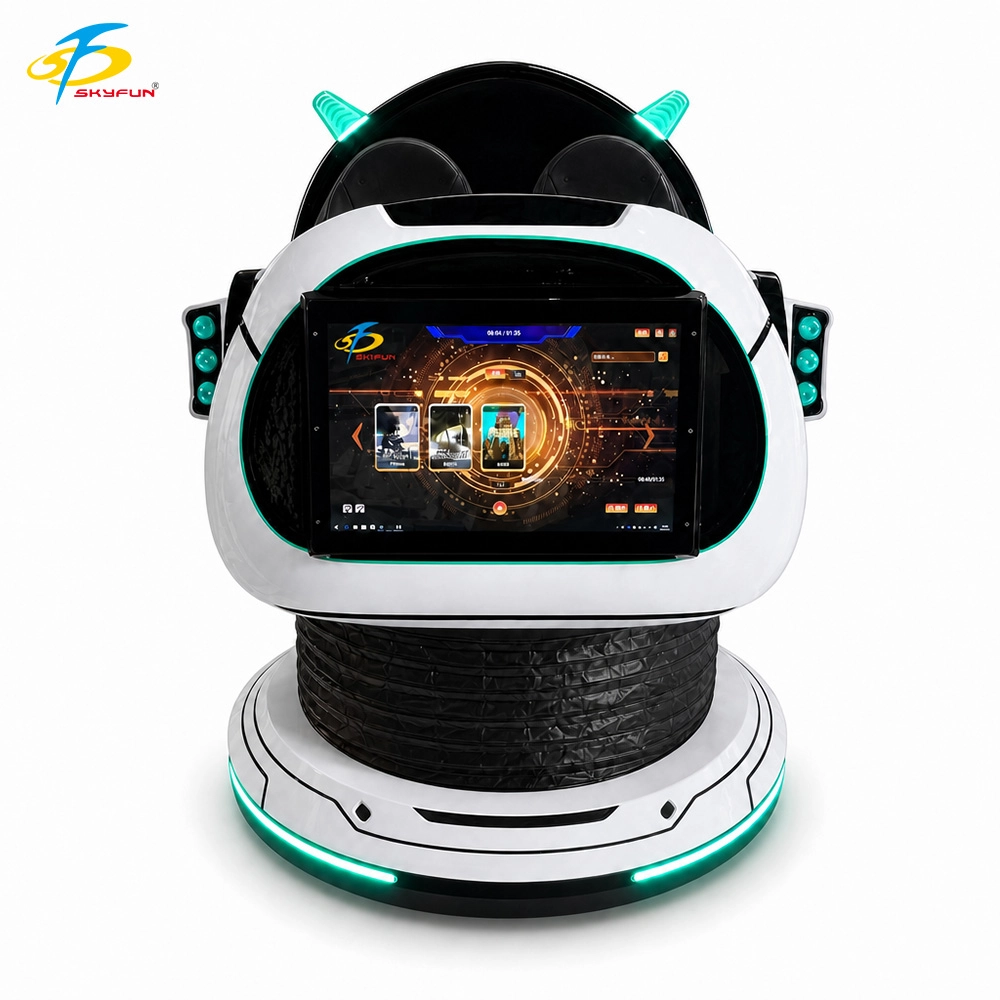
Skyfun 360 Rotating Panda is a two-seat VR motion simulator for commercial entertainment venues. Its crank-driven platform combines dynamic movement with 360-degree rotation, while a fiberglass panda-inspired body and illuminated accents create a distinctive attraction. A 42-inch external display shows the gameplay and supports operator control, and a 13-inch touchscreen lets players select their experience. Designed for VR centers, shopping malls and family entertainment centers.
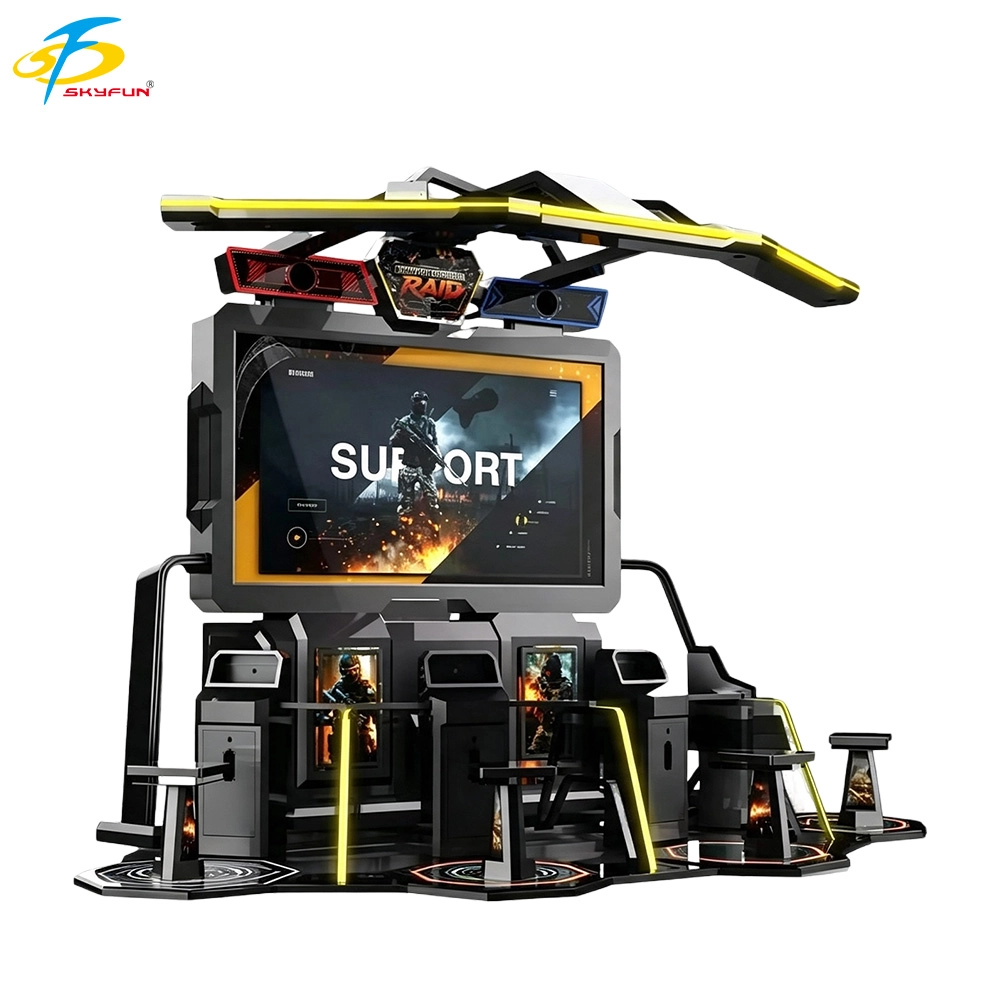
Skyfun Counter Terrorism Raid is a four-player VR shooting simulator for arcades, VR centers and family entertainment venues. Players experience story-driven missions in desert and harbor environments with a variety of in-game weapons, vehicles and interactive scenery. PICO VR headsets, recoil controllers and vibration seats complement the action, while the large external screen lets spectators follow the gameplay.
Want to know more updates?
If you have any technical questions or after-sales needs, please feel free to contact our service team.
We will wholeheartedly provide you with quick response and professional support to ensure the smooth operation of your VR & Arcade project.
 Scan QR Code
Whatsapp: +8618127818571
Scan QR Code
Guangzhou Skyfun Technology Co.,Ltd
skyfunvrgame
skyfun game